Biophilia Ark
Builds high-design living walls that turn dead interiors into living portals, with optional animals, active biofiltration, and revenue flowing back to the real biome each wall represents.
The Corridor
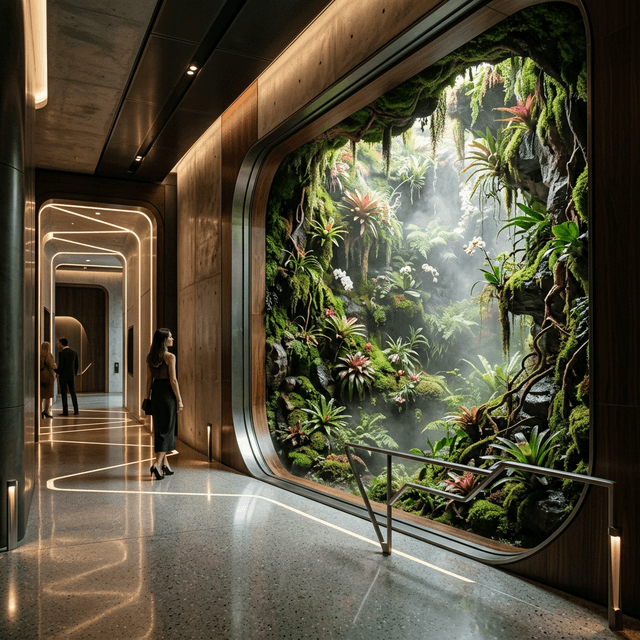
A dead-end hallway becomes a cloud-forest opening with moss, stone, mist, and the flash of a dart frog.
The Lobby
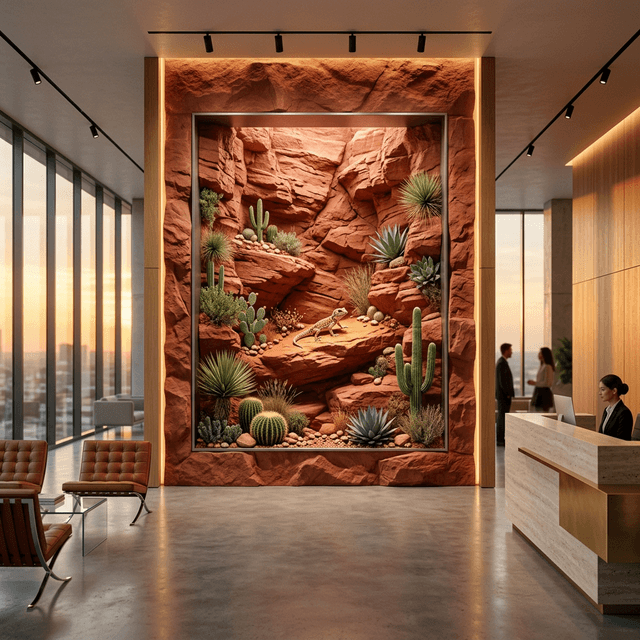
A luxury lobby ends in a glowing desert canyon with sculpted rock, sparse planting, and a gecko on a warm ledge.
The Waiting Room
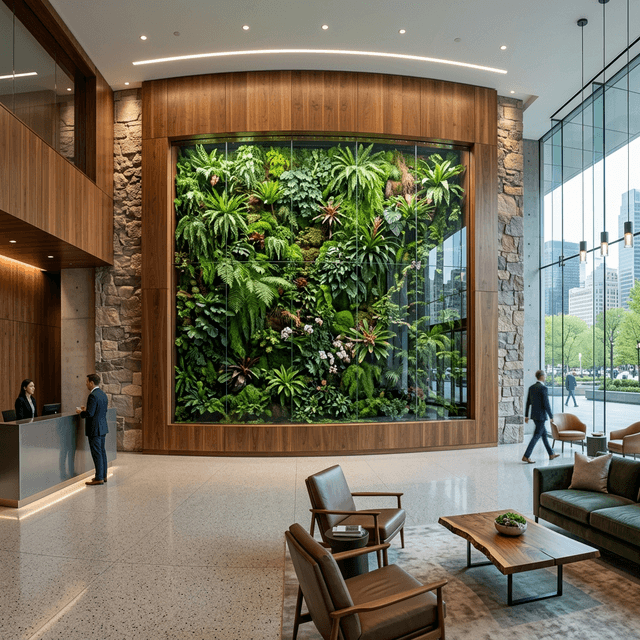
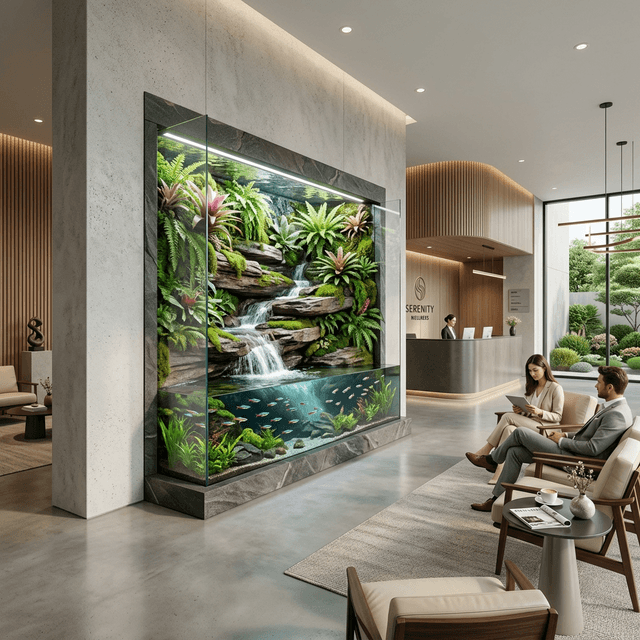
A waiting room gets moving water, schooling fish, and a calm focal point people actually want to watch.
This is not office greenery. It is a new architectural status symbol, one that signals taste, calm, and visible care for the living world.
Wellness real estate reached $584 billion in 2024
and is forecast to reach $1.1 trillion by 2029.
Urban isolation and
the loss of living contact.
Humanity is becoming more urban just as the natural world is under more pressure. The United Nations projects that 68% of the world will live in urban areas by 2050. Around 1 million species are threatened with extinction, and amphibians are the most threatened vertebrate class, with 40.7% of species globally threatened.
The Missing Element
Urban life removes not just wild landscapes, but daily contact with other forms of life. Plants matter, but so do movement, behavior, and the quiet fascination of watching animals exist.
The Current Fix
Existing living walls usually miss the mark. Many look commercial, stick awkwardly into the room, and are sold as generic wellness décor.
The Real Opportunity
Make nature a premium architectural element that wealthy homeowners, hotels, offices, and healthcare spaces actively want because it is calming, beautiful, memorable, and status-enhancing.
Turn dead walls into living worlds.
Start with flush-integrated, modular living walls designed as portals into specific biomes. Win on beauty, calm, social value, and conservation alignment. Then layer in animals and biofiltration where the install, budget, and husbandry standards justify it.
Specific ecosystems that could actually work well.
Desert Monolith
Sculpted canyon stone, sparse high-impact planting, warm light gradients, optional microLED horizon, and shallow reflective water if desired. Captures heat, depth, and silence without forcing a humid ecosystem into a dry interior.
Fauna & Mechanics
Fauna:Small captive-bred desert reptiles (geckos), hardy invertebrates.
Why it works:Visually premium, mechanically simpler, and easy to place in luxury homes, offices, and hospitality spaces.
Freshwater Cliff
Planted ledges, moving water, submerged pockets, and integrated stream or pool sections.
Fauna & Mechanics
Fauna:Small schooling fish, shrimp, snails, and other compatible freshwater life.
Why it works:Fish create immediate emotional pull, especially in waiting rooms, lobbies, pediatric spaces, and hospitality.
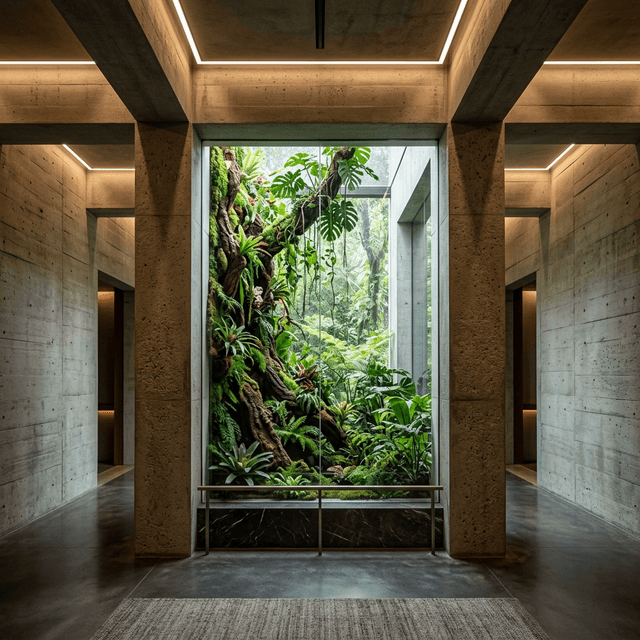
Cloud Forest Wall
Dense moss, bark forms, vines, mist, filtered-green light, and hidden perches. Immersive, high-impact vertical forest ecosystem.
Fauna & Mechanics
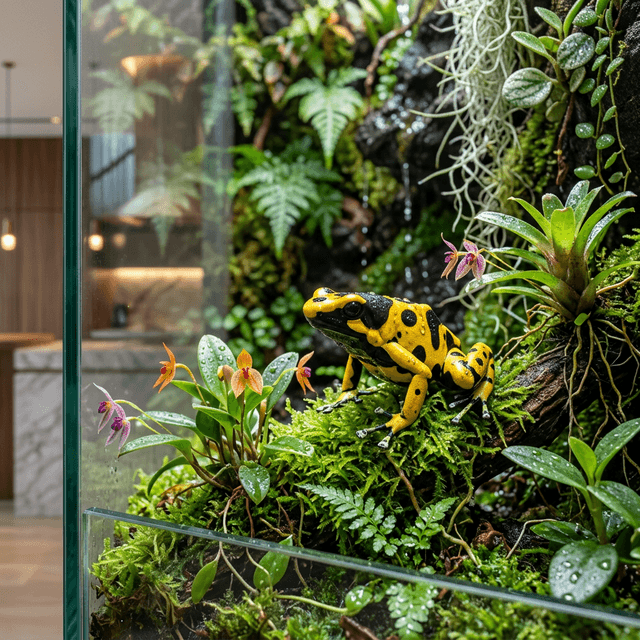
Fauna:Small captive-bred amphibians (dart frogs), tropical invertebrates (walking sticks, display beetles).
Why it works:Delivers strong visual impact and movement while providing a perfectly controlled humid environment for sensitive species.
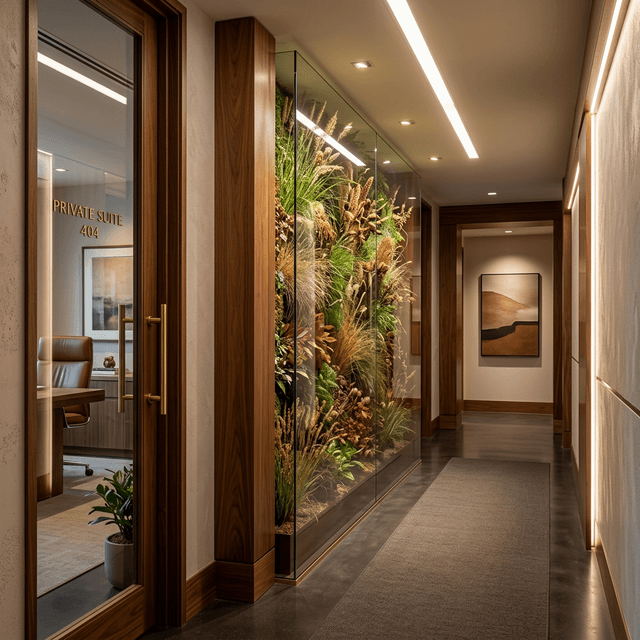
Prairie Lightwall
Native grasses, seed heads, mineral earth tones, and seasonal softness.
Fauna & Mechanics
Fauna:Usually flora-first. Small insect life could be explored in specialized educational versions.
Why it works:Calm, elegant, robust, and easier to scale across commercial spaces.
A prestige product with
real emotional utility.
Neglectedness
Market
The biggest early buyers are luxury homes, trophy offices, hotels, high-end multifamily developers, and select healthcare spaces. They want a calming presence, but they also want a new kind of status symbol.
People know a great biowall is expensive. Unlike a supercar, it signals that the buyer values beauty, nature, and giving back. The company sits inside wellness real estate, luxury interiors, experiential hospitality, workplace design, and conservation-linked brand infrastructure. Those are much larger and better markets than "living walls."
Market Trajectory
Wellness real estate is aggressively expanding, making health-optimizing architectural interventions a trillion-dollar asset class within the decade.
Why Now
The demand is ready because premium real estate, hospitality, and workplace design are moving toward healthier, more memorable environments, and wellness real estate is growing quickly.
The supply is ready because custom fabrication is cheaper, additive manufacturing makes intricate habitat geometry practical, augmented reality makes client visualization easier, sensor stacks make maintenance measurable, and AI makes custom design faster. The company does not need perfect ecological fidelity to win.
Who we serve and
how we grow.
Ideal Customer Profile
The biggest early buyers are luxury homes, trophy offices, hotels, high-end multifamily developers, and select healthcare spaces.
The Growth Loop is Visual
People photograph the install. Designers ask who built it. The venue uses it in marketing. The company publishes every wall as a named world with its biome story, animal life if present, design details, and conservation partner.
Business Model
- Upfront design/install fees
- Recurring maintenance
- Premium biofilter upgrade
- Ecosystem monitoring
- Biome-linked conservation
- Designer collections
Value flow is simple: Buyers get beauty and status. Occupants get a better daily environment. Conservation partners get recurring funds tied to a specific biome. Biophilia Ark gets installation and recurring service revenue.
Media Wedge
Worlds Inside WallsA short-form video and podcast series showing how each installation is designed, built, maintained, inhabited, and tied back to a real ecosystem.
Content focuses on extreme high-definition macro photography of the micro-ecosystems, showcasing the vividly alive, perfectly controlled miniature worlds just behind the glass.
Moat and Defensibility.
Difficulty to Bring to Market
Hard, but very buildable if the first phase stays flora-first, flush-integrated, and tightly standardized, with fauna reserved for premium flagship builds.
Moat Potential
In an AGI world, anyone can generate pretty renders. Very few can keep real living walls and fauna-enhanced micro-ecosystems beautiful, stable, serviceable, and profitable across hundreds of sites.
Lowering the cost of
physical complexity.
AGI lowers the cost of custom ecosystem design, maintenance intelligence, and digital-twin planning. Biophilia Ark can use AI to:
- ✦ Generate site-specific concepts fast
- ✦ Optimize species and materials selection
- ✦ Predict maintenance load
- ✦ Monitor wall health with computer vision
- ✦ Build digital twins of every installation
- ✦ Improve biome-conservation fit over time
Long term, this becomes an operating system for living architecture.
First Experiment
View Initial Validation Pilot
Hypothesis: Premium buyers will pay to reserve a portal-grade living wall before a physical build exists.
Test: Create three elite concept packages, Desert Monolith, Cloud Forest Wall, and Freshwater Cliff, then pitch 30 target buyers in one city.
Pass: 3 or more buyers pay a design deposit of at least $2,500 within 45 days.
Fail: Buyers love the concept but reject the price, timeline, or maintenance plan.
Civilizational Impact.
This company can make cities feel more alive while routing more money and attention toward biodiversity.
Its biggest cultural value is keeping the natural world psychologically present inside urban life. Its biodiversity value is even more distinctive: A child who watches fish schooling, a gecko hunting, or leaf-cutter ants carrying leaves is engaging with life in a more direct way than a generic green lobby plant ever provides. This does not replace real conservation. It helps fund it, popularize it, and make it feel immediate.
78Impact Score
Key Performance Indicators
- ✓ Paid design deposits from target buyers
- ✓ 12-month survival and visual-quality score by ecosystem line
- ✓ Maintenance labor hours per square foot per month
- ✓ Percentage of installs that generate a referral or a second-location sale
Open Source Priority
Transferable Insight
"If you want a mission-driven luxury product to spread, do not lead with guilt. Lead with beauty, identity, fascination, and visible taste, then connect that desire to a real positive externality."
Acronyms & References
Acronyms
- AR: Augmented reality
- CO2: Carbon dioxide
- ICP: Ideal customer profile
- KPI: Key performance indicator
- LED: Light-emitting diode
- microLED: A display made of tiny LEDs
- VOC: Volatile organic compound
References
Valuation Forecast
Probability that the category leader in this space reaches at least each valuation threshold.
AI Rationale
Building high-design living walls that act as bio-filtration systems and digital twins for real-world ecologies is highly capital intensive. The AGI Futures forecaster model generates a heavily depressed curve for early years due to hardware scaling costs. However, if the platform successfully financializes verifiable biodiversity credits by 2035, the valuation potential scales non-linearly.
Implied Valuation Distribution (2030)
While the chart below displays cumulative probability, these boxes break down the exact probability of landing specifically within each valuation band.
Builder Proof-of-Work
Community submitted artifacts, notes, and implementations for this idea.