An AI relationship coach to Make her feel heard, seen, and supported, consistently.
It turns a weekly couple sync, persistent relationship memory, and daily skill reps into a compounding loop for becoming a meaningfully better boyfriend or husband.

Headline Stat
Trajectory of Intimacy Over 2 Years
Intervention group vs. waitlist control
The Problem
Most heterosexual relationships do not fail because the man does not care in the abstract. They fail because the woman repeatedly feels some combination of:
- Not fully heard
- Not emotionally understood
- Too alone in carrying the mental load
- Unseen in her preferences
- Disconnected after conflict
- Frustrated that the same issues recur without real behavioral change
That gap is not imaginary. Women still report carrying more household and cognitive labor than men perceive, and newer work on cognitive labor finds that heavier cognitive load is associated with worse relationship functioning, stress, burnout, and mental health for women.
The cleanest relationship-science framing is not a cartoon binary like "women want feelings, men want sex." In established heterosexual relationships, men and women generally want change in the same directions, but women tend to want larger increases in emotional and companionate behaviors, instrumental support, and parenting involvement, while men tend to want larger increases in sex.
So the core problem is not lack of love. It is lack of partner-specific relational skill, reinforced by weak feedback loops.
The Solution
Attune starts with a clear wedge: help the guy become a meaningfully better boyfriend or husband in the ways that most commonly drive disconnection.

Each week, the couple completes a guided sync. That sync captures:
Attune then converts that input into a personalized curriculum for the man:
- daily 2 to 5 minute micro-lessons
- contextual prompts before important conversations
- behavior-specific challenges in real life
- reflection afterward
- progress tracking across the dimensions his partner actually cares about
This is grounded in a simple research-backed principle: feeling known and feeling responded to matter enormously. Recent work finds that feeling known by a partner predicts relationship satisfaction more strongly than merely feeling like you know your partner, and longitudinal work on partner responsiveness defines it as being met with understanding, validation, and care, with lower responsiveness linked to declines in relationship satisfaction.
The app is not just a content library. It is a relationship memory system that remembers what matters to this woman, where this man keeps missing, and which interventions actually improve the relationship.
Optional Woman-Side Mode
The woman-side experience is important because it makes the product feel like both partners are improving the relationship, not like one person is being "managed." But the product should stay honest about the wedge: in many heterosexual relationships, the larger early deficit is still the guy needing to become more present, responsive, emotionally intelligent, and proactive.
Primary Mode
Woman contributes feedback, goals, and weekly sync input; man receives the main daily coaching.
Reciprocal Mode
Activated when bilateral improvement will clearly help, or when the woman explicitly wants her own coaching path.
The woman-side curriculum should usually be different, not just mirrored. The best-supported version is not "get less upset" in some blanket sense. It is more like:
- clearer, more non-hostile requests for change
- more explicit appreciation and gratitude
- more concrete support that takes real load off his plate during stress
- better visibility into his preferences and bids for connection
- affectionate and sexual responsiveness where relevant
That mix fits the evidence better than pop stereotypes. Gratitude and responsiveness reliably help relationships, a brief gratitude intervention increased couples' daily time spent co-present, responsiveness predicts affectionate touch, and research on criticism suggests that non-hostile, constructive, practical change talk can be beneficial, with some evidence that this style may matter especially for men.

Ideal Customer Profile
1Primary ICP
A woman in a serious dating relationship, cohabiting partnership, engagement, or marriage who feels that her partner is a good man with good intentions, but not yet the man she needs emotionally. She wants him to improve in ways that are hard to force manually: listening, emotional understanding, initiative, follow-through, remembering what matters to her, conflict repair, and quality of presence.
Economic Buyer Wedge
Usually the woman is the one most motivated to seek a solution, invite him in, and push for consistent usage.
Secondary ICP
Premarital couples who want to build elite relationship habits early instead of waiting until resentment calcifies.
End-user transformation target (The Guy)
The Product
The Core Loop is the Company
Product Layers
1. Dual Onboarding
Each partner separately maps strengths, pain points, conflict style, affection/intimacy preferences, planning friction, emotional triggers, appreciation preferences, future goals, what makes them feel cared for or shut down.
2. Weekly Couple Sync
A 10 to 15 minute guided ritual that updates the relationship state.
3. Personalized Micro-lessons (For Him)
- Validate before solving
- Ask one clarifying question before responding
- Notice and carry one invisible planning burden
- Make a repair attempt that owns impact, not just intent
- Anticipate one need before she asks
4. Role-specific Coaching (For Her)
- Convert vague frustration into one concrete ask
- Express appreciation for one thing he carried this week
- Respond to one stress cue by removing a burden
- Make one bid for affection or intimacy more explicit
- Turn criticism into non-hostile guidance
5. In-the-moment Coaching
Before conflict, after conflict, before date night, before family events, after missed bids for connection, before intimacy conversations.
6. Relationship Memory Engine
Attune remembers what she has explicitly said matters, what he keeps forgetting, which gestures land, which conflicts repeat, which repair attempts work, and which goals were set and whether they were honored.
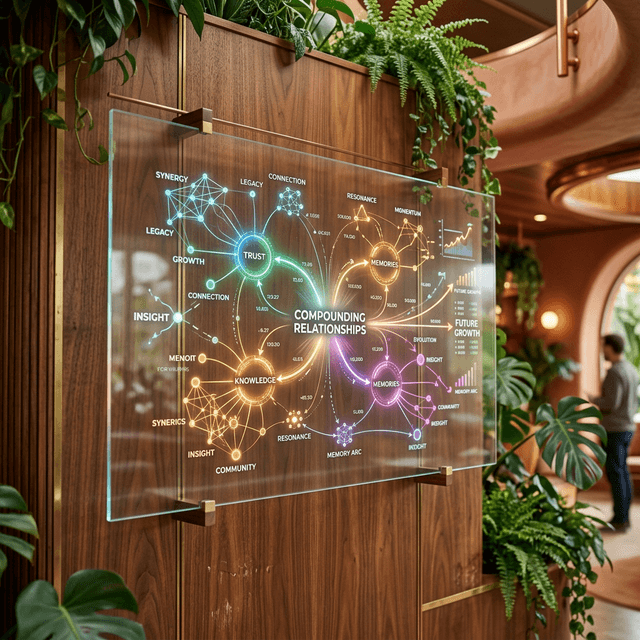
This is the moat. Not prompts. Not chat. Structured relationship memory plus behavior change.
Neglectedness
Why Now
Men and women are equally likely to say they would turn to a spouse or partner for emotional support, but women are much more likely than men to also turn to friends, mothers, and other family members. A recent interdisciplinary review argues that romantic relationships may matter more to men on average partly because men often have narrower alternative emotional-support networks.
That creates a powerful product opening. Women are increasingly unwilling to tolerate chronic emotional underperformance, while many men are more willing to try a high-agency coaching product than to enter therapy first. The result is a wedge where one partner feels the cost more acutely, and the other is coachable if the path is concrete enough.
Market
This sits at the intersection of:
The immediate wedge is not "all couples." It is women who want their male partner to improve, and men who are willing to become more skillful if the path is personalized, specific, and low-friction.
Business Model
Subscription & Expansion
Core Subscription
- Attune for Him: personalized daily coaching based on weekly couple input
- Attune Couple: guided weekly sync plus coaching and shared progress dashboards
Expansion Revenue
Premarital program, post-baby program, conflict reset sprint, reconnect after drift program, therapist dashboard, employee wellness/EAP distribution.
Go-To-Market
- 1. Woman-led invitation loop"Here's an app I want us to try" is a more natural wedge than cold-start acquisition aimed only at men.
- 2. Men's self-improvement framingThe product should feel like a high-leverage life upgrade, not a scolding.
- 3. Creator-led acquisitionTherapists, couples creators, women explaining what "feeling heard" actually means.
- 4. Viral content engineHooks like: "Your girlfriend should not have to be the relationship project manager."
AGI-era Edge & Defensibility
In an AGI-saturated world, the scarce value is not generic advice. It is: persistent state, accurate diagnosis, contextual coaching, and measurable behavior change.
Attune wins because it does not just generate relationship content. It maintains a living model of the relationship, translates messy weekly feedback into role-specific behavioral training, and updates the curriculum continuously.
Data Moat
Over time Attune learns which deficits are most common, which interventions change behavior fastest, which patterns predict resentment, and which prompts improve connection.
Memory Moat
A generic chatbot cannot easily replicate a persistent relationship graph with weekly updates, partner-specific preferences, and measurable growth trajectories.
Trust Moat
If Attune becomes the product that most accurately captures "what my partner actually needs from me," switching costs become high.
Transferable Insight
"Most human relationships break down not because people do not care, but because feedback is too generic, too delayed, too emotionally messy, and never converted into role-specific practice."
Attune's reusable product pattern: shared state capture → persistent memory of goals, preferences, and friction → asymmetric coaching for the bigger performance gap → bilateral coaching when useful → visible behavior change → new feedback. Generalizes to co-founders, managers, and parents.
Civilizational Impact
Strong pair bonds are a foundational human technology. They shape family formation, child outcomes, mental health, life satisfaction, social trust, and long-term flourishing.
If AI can help millions of men become more emotionally competent, more attentive, and more trustworthy as partners, that is not just a consumer app. It is an upgrade to the social fabric.
References
Valuation Forecast
Probability that the category leader in this space reaches at least each valuation threshold.
AI Rationale
Developing an AI relationship coach to make partners feel heard requires a sophisticated blend of emotionally resonant LLMs and consumer trust. While strictly software, the category faces high churn and specialized competition. The AGI Futures forecaster model projects steady growth, with massive upside if the platform achieves global daily active use.
Implied Valuation Distribution (2030)
While the chart below displays cumulative probability, these boxes break down the exact probability of landing specifically within each valuation band.
Builder Proof-of-Work
Community submitted artifacts, notes, and implementations for this idea.