AURA
Embodied Intelligence Stack
AURA is an open-source software development kit plus avatar marketplace that lets any developer drop lifelike, spatially aware AI companions into augmented reality apps.
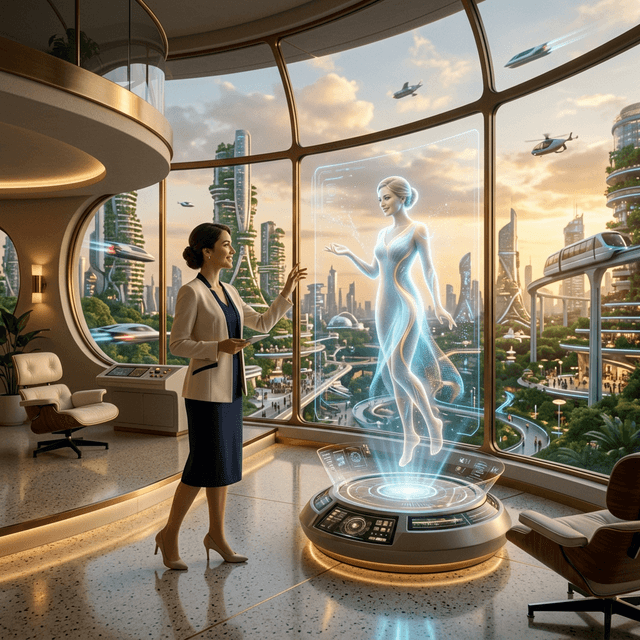
The Hardware Curve
43.1M
XR headsets & smart glasses
annual projection by 2029
70-80
Minutes per day spent
on Character.AI
IDC forecasts annual extended reality headset plus smart-glasses shipments reaching 43.1 million units by 2029, a 31.8% compound annual growth rate , while Character.AI says its more than 6 million daily active users spend 70 to 80 minutes per day on the platform . Demand for personable AI is already here. The hardware curve is catching up.
Forecasted Global Shipments
The Problem
Today's AI is powerful, but still mostly disembodied. Voice assistants cannot reliably see what you are doing, point to the right object, read body language, or guide action in real time. Meanwhile, every augmented reality developer still ends up rebuilding scene understanding, occlusion, gesture systems, and safety rails from scratch.
Disembodied UX
Voice assistants cannot see what you are doing or use body language well.
Reinvent-the-wheel overhead
Every augmented reality developer still hand-codes occlusion, inverse kinematics, scene graphs, and safety rails.
Loneliness and skill gaps
Users crave real-time feedback, motivation, and social connection that videos or chatbots cannot fully provide. Social isolation and loneliness are widespread in the United States.
Why now
Build NowThree curves are crossing.
1.Hardware is getting real.
IDC now projects 43.1 million annual units by 2029, led by display-less and lightweight smart glasses.
2.The developer stack is maturing.
Google says Developer Preview 3 of the Android XR software development kit opens development for AI glasses, headsets, and wired XR glasses, while OpenXR continues to reduce cross-platform fragmentation.
3.The demand signal already exists.
Character.AI's usage shows that millions of people already spend social-product levels of time with personable AI.
This is exactly the kind of inflection where a new interface layer can become the standard before incumbents fully organize around it.
Core Architecture
Large Language ModelsVoice AIVision AISpatial ComputingAugmented Reality- Open-source software development kit, Apache 2.0: scene-graph application programming interface, behavior-graph domain-specific language, emotion and gesture library.
- Cloud runtime, hosted and optional: spatial intelligence engine, memory kernel, consent-driven cloning pipeline.
- Marketplace, 25% take rate: sell avatars, motion packs, premium behaviors, subscriptions, and in-avatar purchases.
AURA combines four layers into one reusable stack:
Policy Layer
Policy Layer
Layer 01
Consent, bystander privacy, age-gating, escalation rules, boundaries.
Memory Layer
Memory Layer
Layer 02
Scoped goals, preferences, routines, and optional sync with personal AI.
Behavior Layer
Behavior Layer
Layer 03
Gaze, gesture, turn-taking, locomotion, and inverse kinematics.
Perception Layer
Perception Layer
Layer 04
Real-time scene graph, surface anchoring, occlusion, body-pose estimation.
Tagline, dev-facing: Ship embodied intelligence in hours, not months.
Tagline, consumer: AI that actually shows up.
Core Use Cases
Learn and Perform
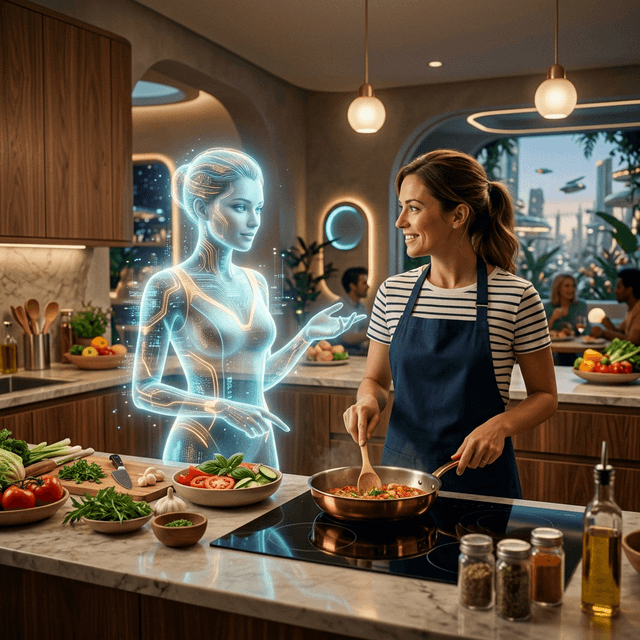
Cooking Companion
Highlights ingredients, corrects technique, and helps users master recipes faster.
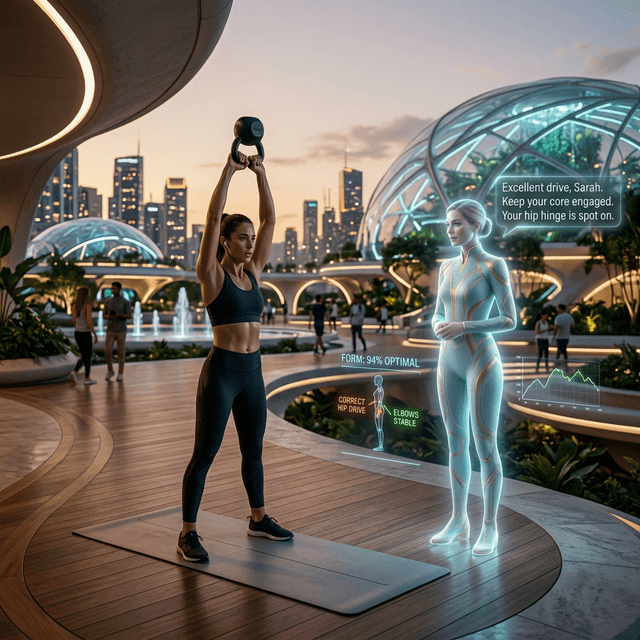
Fitness Trainer
Tracks form and reps, gives live cues, reduces injury risk, and increases motivation.
Work and Flow
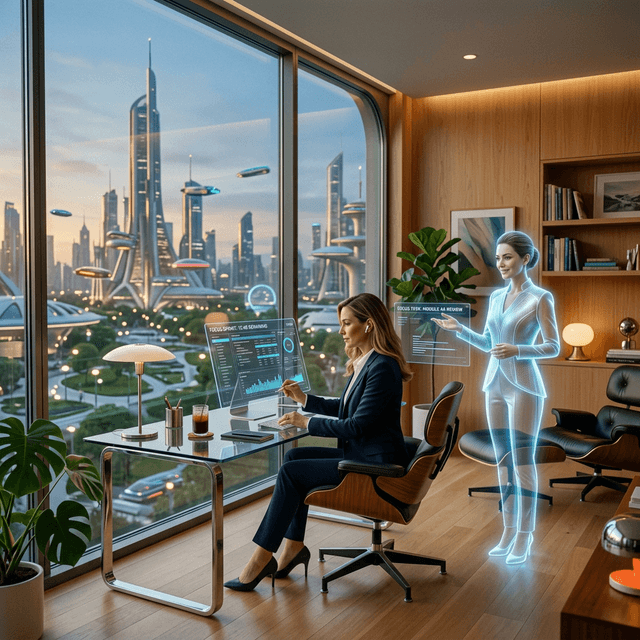
Virtual Coworker
Runs focus sprints, posture nudges, and could become the avatar embodiment of AI agents working for you.
In-Transit & Daily Life
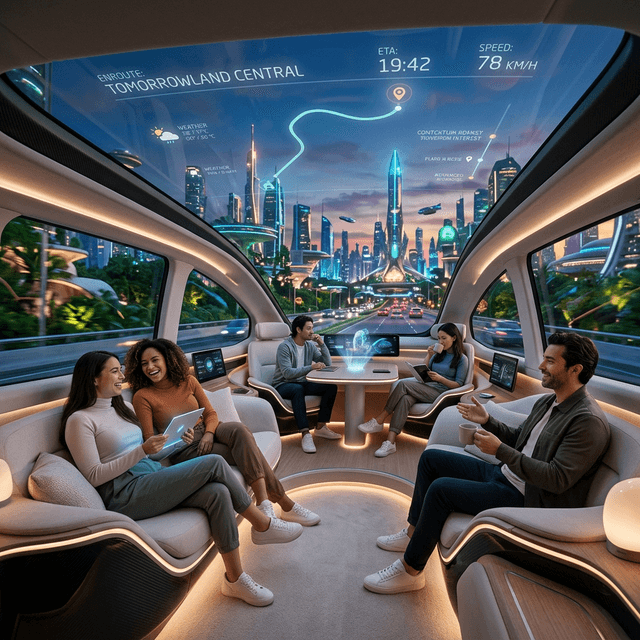
Autonomous Vehicle Windows
Turns the windshield into a context-aware HUD, overlaid on the real world while passengers lounge.
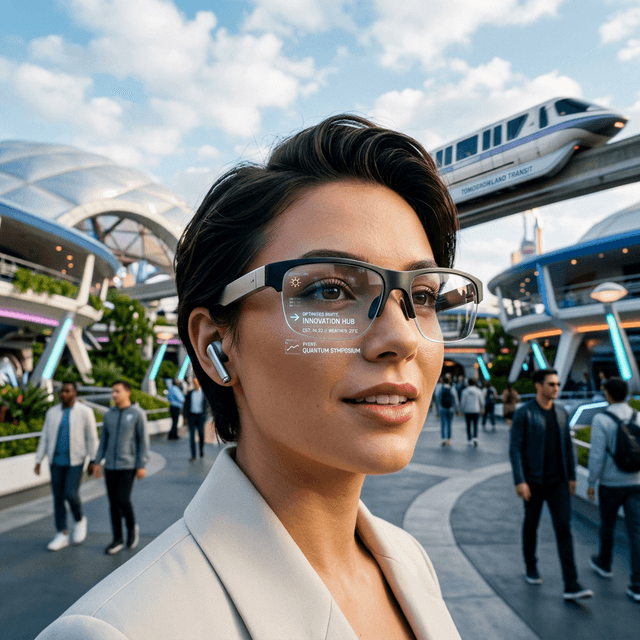
Always-on AR Glasses
Sleek, stylish form factors providing elegant digital interfaces and subtle routing intelligence.
Connect & Mind

Surrogate Friend or Partner
An opt-in presence clone of a loved one that can leave messages, share presence, or hang out when they cannot be there physically.
The first wedge is still not "all of the above." It is fitness, training, and communication rehearsal, where outcomes are objective and demos are undeniable. Research already supports augmented and mixed reality in learning and training contexts.
Neglectedness
The Market Story
ConsumersStartupsThe right market story is not "avatars." It is the default interaction layer for embodied software. IDC expects software, services, and related technologies around augmented and virtual reality to reach nearly $12 billion in 2025, while the broader AI app market is projected by Business of Apps to reach $156.9 billion by 2030.
Bottom-up Math
Start with IDC's 43.1 million annual-device forecast in 2029.
- Monthly embodied-agent users20%
- Blended spend (coaching, premium)$18 / mo
- AURA Capture (runtime + marketplace)20%
from one annual shipment cohort alone
Business Model
PlatformMarketplaceMarketplace Take
One-time avatar sales, monthly subscriptions, and in-avatar upsells.
Cloud Runtime
Optional pay-as-you-go for spatial engine, memory kernel, and cloning services.
Developer SDK
No developer fees. Maximize adoption, then monetize runtime and commerce.
Moat Potential
Data advantage or switching cost in an AGI world. In a world of abundant intelligence, reasoning gets cheaper, but grounding, trust, and distribution do not.
Difficulty to Bring to Market
This is a hard platform bet. The product must be useful, emotionally legible, safe, and sticky at the same time. Overall risk score: 7.8 / 10.
First Experiment
Build one narrow kit for mobile augmented reality fitness coaching with pose tracking, one avatar, five corrective cues, session memory, and creator skinning.
Civilizational Impact
The white-pill case is obvious. AURA lowers the cost of coaching, skill formation, emotional support, and social rehearsal. It can help more people cook, train, learn, practice, regulate, and stay engaged with life.
But there is a deeper civilizational role here. If built correctly, embodied personal AI could reduce pathways into mass violence, terrorism, and ender ideologies. The mechanism is not predictive policing. It is early, consent-based interruption of isolation, grievance spirals, and maladaptive rumination.
"If AURA becomes the default embodied-agent layer and chooses the right incentives, it does more than create a big company. It helps bend everyday AI toward human flourishing, social cohesion, resilience, and ender prevention."
Transferable Insight
Decouple intelligence from the presentation layer.
The highest leverage in interface design is separating the reasoning engine from the visual shell. When your agent's memory and behavior graph can plug indiscriminately into any frontend—be it a web UI, a voice channel, or spatial hardware—your product survives hardware shifts and scales infinitely.
Open Source Priority
References
U.S. Surgeon General, Our Epidemic of Loneliness and Isolation.
View Source ↗Business of Apps, AI App Revenue and Usage Statistics (2026).
View Source ↗Character.AI, An Update On Changes to Our Under-18 Experience.
View Source ↗National Counterterrorism Center, Terrorism Prevention: Addressing Early Risk Factors To Build Resilience Against Violent Extremism.
View Source ↗