
BioArk
BioArk is a trust and funding platform for conservation breeding that routes capital to more effective programs, helps ethical new entrants prove capability, and increases both the efficiency and total volume of funding flowing into species recovery.
The global biodiversity framework targets closing a $700 billion per year biodiversity finance gap, while IPBES has warned that around 1 million species are threatened with extinction. On the amphibian side alone, 40.7% of species are globally threatened.
BioArk’s bet is that if conservation becomes measurable and comparable, much more capital will flow in.
Constrained by trust.
Today, conservation breeding is constrained by more than biology. It is constrained by trust, coordination, and visibility into results. There are skilled breeders, growers, and caretakers outside the legacy system, but there is no strong shared mechanism for answering the questions that matter most.
Were the founder animals or plants ethically sourced?
Is this operator actually capable?
Are the outcomes real?
Is the program preserving genetic diversity or just producing activity without progress?
Should more capital flow here, or somewhere else?
So the system defaults to institutional familiarity over expandable capacity. That suppresses the number of programs that can run, the number of people who can safely contribute, and the amount of capital outsiders are willing to commit. The One Plan Approach already argues that effective conservation should coordinate actions across all populations of a species, inside and outside natural range. The need is understood. The operating system still does not exist.
A graduated trust ladder.
New entrants begin with properly sourced lower-risk animals or plants and tightly scoped programs. Every stage is verified through identity, sourcing records, husbandry logs, welfare standards, species-specific training, and measured outcomes. Trust is earned step by step.
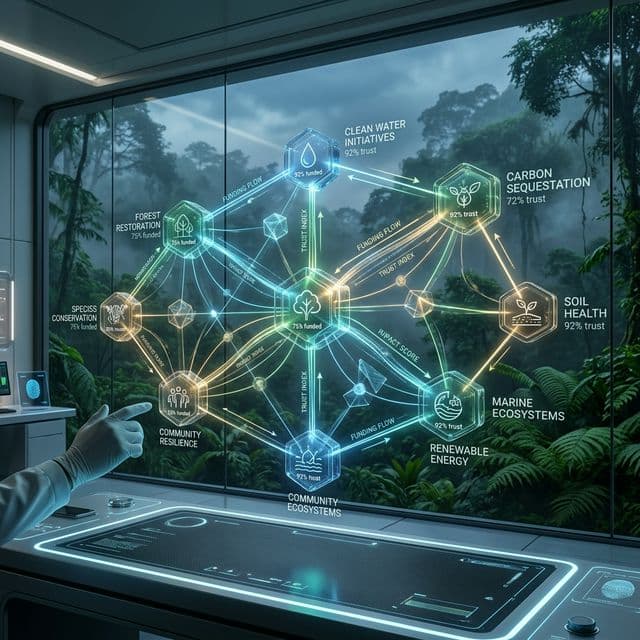
BioArk is a coordination platform with four core layers:
1. Entry and sourcing layer
Verifies the initial sourcing of founder animals, plants, tissues, seeds, or reproductive material before entering the network. Ensures capacity starts from ethical, non-extractive origins to not pull from the wild.
2. Capability & progression layer
Breeders and growers build reputation through verified performance on lower-risk programs, unlocking access to more complex species, sensitive conservation work, and larger funding pools.
3. Genetic & monitoring layer
Coordinates lineage records using AI and computer vision to help verify individuals, reduce fraud, strengthen transfer records, and improve pairing decisions via conservation genomics.
4. Proof-of-impact funding layer
Funders can back a specific breeder, species, biome, or portfolio. Showing what changed after the money moved increases funding efficacy and expands what programs can attempt.
Specific Example per ICP.
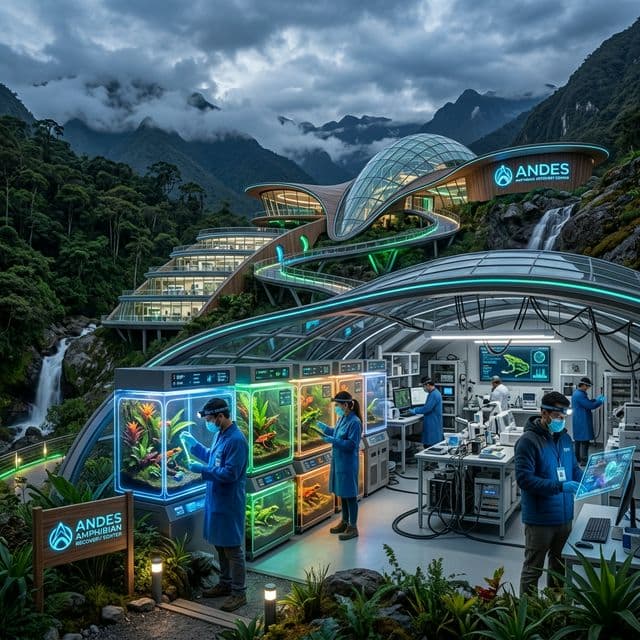
For a conservation nonprofit
An amphibian recovery nonprofit in the Andes needs more capacity for assurance colonies. It uses BioArk to credential vetted regional breeders, monitor husbandry quality, and route donor capital into the best frog programs. A donor can fund one species or across the strongest amphibian programs in a cloud-forest corridor.
Neglectedness
Trusted execution capacity for biodiversity recovery.
From first principles, every serious breeding program needs lawful sourcing, capable operators, genetic management, monitoring, and recurring capital. Today those are fragmented across grants, spreadsheets, and studbooks. That keeps capital out and labor pool small. BioArk’s thesis is that proof of impact expands the funding pool itself.
The specific first wedge is amphibian conservation. They are the most threatened vertebrate class, programs depend on specialized husbandry, and distributed captive capacity matters hugely.
Forces aligning.
- 1 Biodiversity finance is becoming a real capital-allocation category with pressure to measure impact and close the funding gap.
- 2 Conservation planning has conceptually shifted toward integrated management across wild and managed populations.
- 3 The technical stack is good enough. Machine learning is useful in wildlife monitoring, and conservation genomics is becoming operational.
Value flow to stakeholders.
Breeders and growers get funding access, a trust-building pathway, clearer progression, and larger responsibly.
Conservation organizations get more verified capacity, stronger reporting, wider geographic reach, and higher donor confidence.
Funders get selective funding options, better allocation efficiency, transparent milestones, and proof their money changed outcomes.
Scientists get stronger records, lineage coordination, and better visibility across distributed programs.
BioArk earns through:
- platform fees
- credentialing and verification fees
- funding take rate
- premium analytics and reporting
- program management modules
- enterprise contracts with zoos, gardens, agencies, and nonprofit networks
Difficulty to Bring to Market
The hard part is not building the dashboard. It is building a system that conservation institutions, funders, and regulators trust enough to expand participation without lowering standards.
Moat Potential
BioArk’s moat is the trust graph.
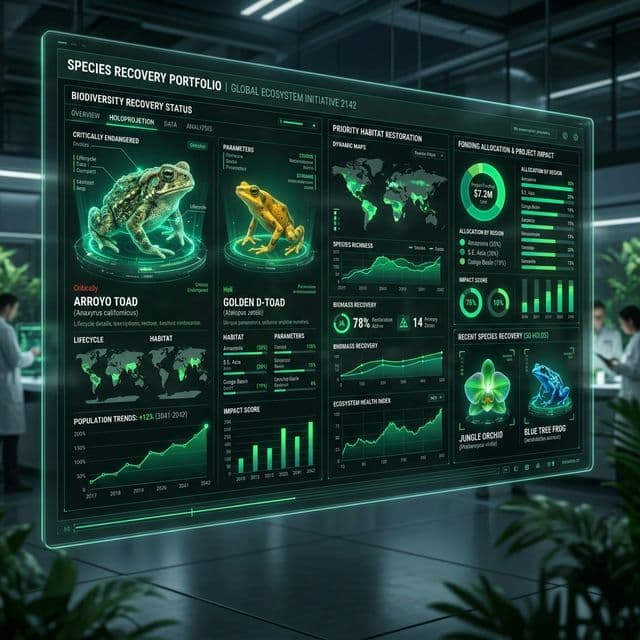
Viral growth idea.
Launch "Back a Species" pages.
Every breeder or conservation program gets a beautiful public page for a species or portfolio. Showing the animals protected, the work done, updates, and next funding unlocks. Built to be shared.
User wedge
Start with amphibian conservation groups and creators with husbandry skill. The work is specialized and the funding gap is immediate. They cannot wait because every missed breeding season narrows the recovery window.
Biological options do not wait.
Biodiversity loss is different from software. A species lost now does not wait for better models or more compute. That makes BioArk aligned with an AGI future: as intelligence gets cheaper, the platform gets stronger at verifying images, analyzing genetics, and routing funding.
AGI may expand our ability to coordinate, it cannot cheaply restore lineages that were never preserved. BioArk uses better intelligence to protect the biological options that still exist, while there is still time.
Minimal falsifiable test.
Recruit 5 amphibian operators, 3 conservation organizations, and 10 funders into a no-code pilot...
Track one breeding season with verified sourcing, milestone reporting, and simple public proof-of-impact pages. The hypothesis is that at least 3 funders increase or repeat funding because the work becomes more legible, and at least 2 organizations decide the trust-ladder model is strong enough to onboard new external capacity.
Civilizational Impact.
Biodiversity is resilience infrastructure. A civilization that preserves more species, more genetic diversity, and more ecological options is less fragile. BioArk models how to open sensitive domains to more contributors without collapsing standards.
If it works, it expands the number of capable actors who can responsibly participate in species recovery and pushes conservation from static preservation toward scalable recovery.
85Impact Score
KPIs
- ✓ Quality-weighted operator advancement rate
- ✓ Repeat and expanded funding rate
- ✓ Cost per verified conservation milestone
- ✓ Time to first approved assignment
- ✓ Net new capacity unlocked
Open Source Priority
Transferable Insight
"In trust-constrained sectors, the biggest unlock is often not better matching. It is a system that makes competence visible, risk legible, and funding easier to justify."
Acronyms & References
View Source →
View Source →
View Source →
View Source →
View Source →
View Source →
View Source →
View Source →
Valuation Forecast
Probability that the category leader in this space reaches at least each valuation threshold.
AI Rationale
Building a trust and funding layer for species recovery faces initial friction from deeply risk-averse, grant-based conservation funding models. However, the AGI Futures forecaster model assigns a high probability to reaching a $1B+ network valuation if it successfully acts as the unified proof-of-impact ledger for the global biodiversity funding gap, bridging private capital directly to verified, distributed ecological capacity.
Implied Valuation Distribution (2030)
While the chart below displays cumulative probability, these boxes break down the exact probability of landing specifically within each valuation band.
Builder Proof-of-Work
Community submitted artifacts, notes, and implementations for this idea.