Hearth
Friend-Native Housing
Hearth makes it radically easier to start, join, and operate intentional living communities with people you actually want to share life with, from one house to a distributed network of homes around the world.
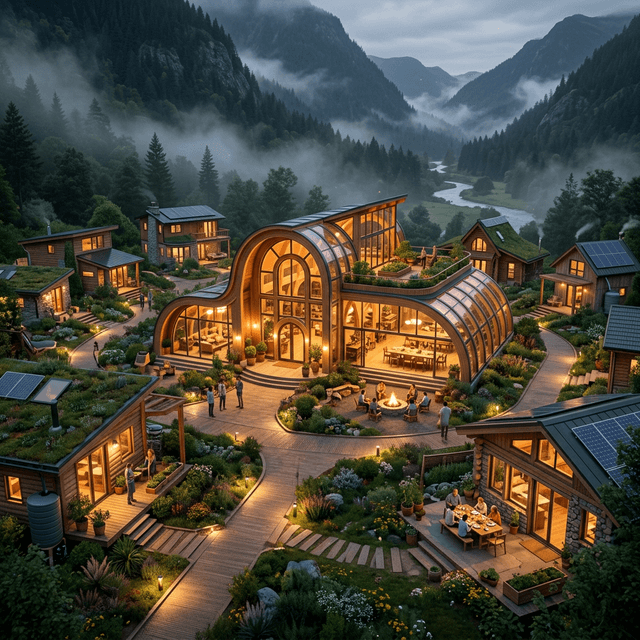
The Opening
1 in 3
U.S. Adults Report
Feeling Lonely
43.4M
Housing Cost-Burdened
Households in 2024
About 1 in 3 U.S. adults report feeling lonely, while 22.7 million renter households and 20.7 million homeowner households were housing cost-burdened in 2024. That is not two separate problems. It is one opening. 1 4
The Problem
Housing is still sold like a solo decision, one household, one mortgage, one lease, one set of duplicated costs. Real life does not work that way. People want proximity to friends, mutual aid, shared tools, shared childcare, shared meals, and more resilient social lives. But the current stack fragments everything across listings sites, spreadsheets, text threads, lawyers, lenders, architects, property managers, and awkward interpersonal negotiations. 2 4 5
The deeper tension is this: the social value of living with aligned people is high, but the coordination cost is even higher. Preference mismatch, governance ambiguity, financing complexity, zoning friction, and fear of future conflict kill most communities before they become real.
Solution Hypothesis
Mechanism first: reduce coordination friction, trust friction, and operating friction so dramatically that "we should live together someday" becomes a manageable workflow instead of a fantasy.
Product form: a vertically integrated platform for community formation, property discovery, governance, and ongoing operations.
Tagline
Build a life with your people.
Core Product Stack
1. Cohort Formation Engine
Hearth helps groups discover whether they should actually live together before money gets wired. It captures values, budget ranges, lifestyle preferences, conflict triggers, and dealbreakers.
2. Governance & Exit Wizard
Every community gets a starter charter: decision rules, chore norms, guest rules, financial contribution logic, conflict escalation, and departure pathways. Hearth productizes the unspoken layer.
3. Property Search & Feasibility
AI-assisted search across homes, land, and multifamily, plus a feasibility pass for zoning, renovation needs, density, and shared amenity fit.
4. Legal & Capital Toolkit
Templates and partner workflows for co-buying, land holding, entity formation, operating agreements, and equity logic to build solid financial foundations.
5. Community Operating System
Shared calendar, expenses, chores, maintenance, votes, community health check-ins, room allocation, and lightweight mediation prompts.
6. Network Pass
The long game is a federation of trusted communities. Members can spend a season in another Hearth community. Vacant rooms monetize cleanly, and friends can travel together.
7. Supply-Side Services
For selected markets, Hearth can design, retrofit, or co-develop high-aesthetic intentional communities, then sell, lease, or operate them. The brand becomes physical.
Specific Example per ICP
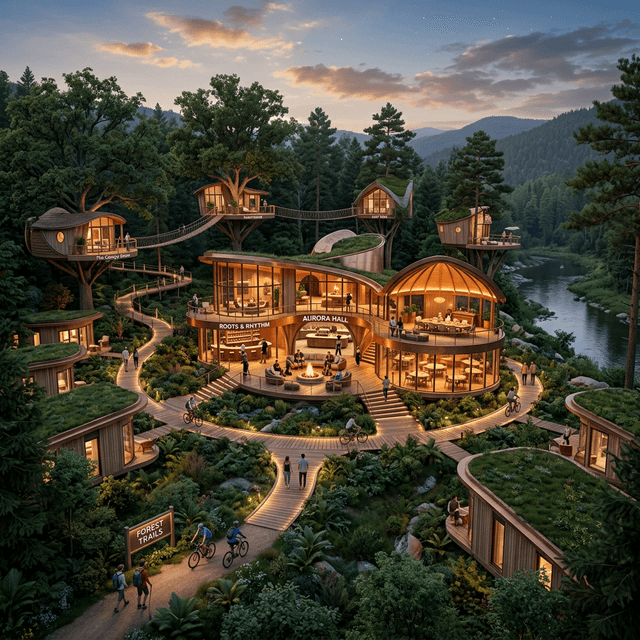
Adventure-minded digital nomad couple
A remote-working couple wants a high-beauty, high-freedom home base without giving up movement and novelty. Hearth matches them into a small networked community centered on elevated treehouses, compact cabins, or hillside eco-bungalows near surf, climbing, or trail access. The shared layer includes coworking, a communal kitchen, gear storage, sauna, and guest suites. Their private space stays intimate. Their social life gets larger. Their travel becomes easier because they can rotate through other aligned Hearth communities without starting from zero each time.
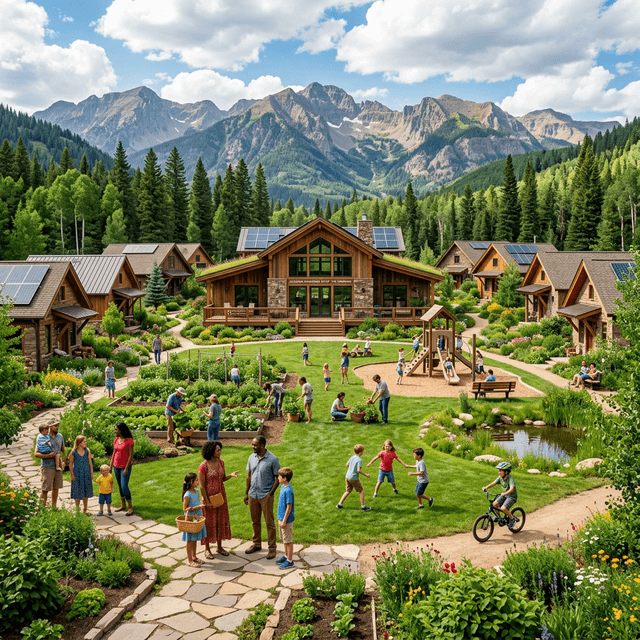
Front Range family-friend homestead cohort
Three to six couples or young families want to raise kids closer to friends, reduce duplicated costs, and share more of daily life without collapsing privacy. Hearth helps them launch a Colorado Front Range homesteading community with one large communal house for shared meals, events, coworking, childcare swaps, and tools, plus smaller detached homes, cottages, or ADUs for each family. The layout matters. Parents get backup. Kids get built-in community. The group can justify amenities none of them would buy alone, from workshop space to gardens to cold plunge to shared utility infrastructure.
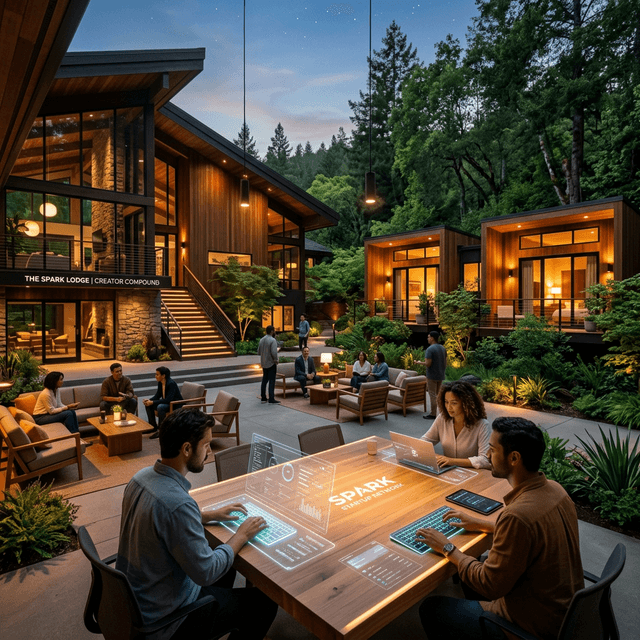
High-agency founder or creator house
A group of startup founders, artists, or researchers wants an environment that feels part living space, part studio, part private accelerator. Hearth helps them secure a large mansion, small inn, courtyard compound, or converted lodge with strong common areas, podcast rooms, workshop space, and quiet private suites. Governance is explicit from day one. Guests, visiting collaborators, and short-term trial residents can flow through without destabilizing the core culture. The home becomes a force multiplier for output, serendipity, and emotional resilience.
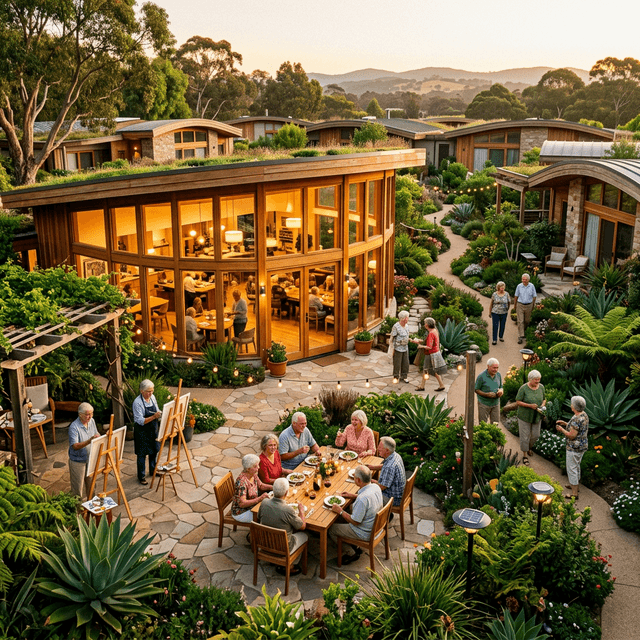
Aging-with-friends community
A cohort of older adults wants to avoid isolation, preserve autonomy, and create a softer path than traditional senior living. Hearth supports a single-level cottage cluster, courtyard bungalow community, or retrofitted small multifamily property with a central shared house for meals, gatherings, wellness programming, and light mutual support. People keep independence while gaining companionship, shared services, and a trusted social fabric that makes later-life living feel more human and less institutional.
Mission-aligned intentional community
A sustainability, impact, or techno-optimist cohort wants to live inside its values instead of just talking about them online. Hearth helps them form a branded intentional community around a working farm, mountain basecamp, desert retreat campus, or mixed live-work compound.
One version looks like an e/acc builder village with labs, workshops, and communal dinners. Another looks like a regenerative farmstead with orchards, greenhouses, and apprenticeships. The point is not just housing. It is making culture physically real.
Neglectedness
Market
The real market is larger than "co-living." Hearth sits at the intersection of housing, real estate services, property operations, and community infrastructure.
The initial wedge is narrow and high-intent: groups already trying to form a shared home, founders and creators wanting intentional proximity, and existing communities that need better software. That is enough to build a software and services business.
The expansion case is much bigger. Housing affordability is worsening, home prices remain near five times median household income, home sales hit a 30-year low, and only a small fraction of renters can afford the median-priced home. Meanwhile, remote and hybrid work sustain demand for more flexible living patterns. Hearth is a coordination layer for turning underused bedrooms, second homes, small multifamily properties, and community-suitable land into higher-value social infrastructure. 4 5 6
Structural Demographic Shift
The honest take: software alone is probably not a massive company here. The venture-scale outcome appears if Hearth becomes the default formation and operating layer, then captures transaction flow, financing, property supply, and network mobility on top.
Why Now
Three curves are finally pointing in the same direction.
Social Demand
Social isolation and loneliness remain widespread, and adults living alone are a meaningful share of the population, especially among older adults. 1 3 7
Economic Demand
Housing affordability is at crisis levels. Cost-burdened renters and homeowners both reached extreme levels, with median home prices five times median household income. 4 5
Technical Feasibility
AI is now good enough to do preference elicitation, scenario modeling, governance drafting, property filtering, and concierge-style community ops at low cost. The coordination layer is dramatically more buildable now.
Business Model
Formation revenue
Paid concierge packages for new communities: alignment facilitation, governance setup, property shortlist, and launch support.
Software revenue
Per-community subscription for the OS, plus premium modules for vacancy management, guest stays, voting, and financial tooling.
Transaction revenue
Referral or take-rate on property transactions, lending, insurance, legal partners, architects, prefab builders, and relocation services.
Network membership revenue
Member subscriptions for access to the broader Hearth network and reciprocal stays across communities.
Development revenue
Selective design-build, retrofit, or co-development margin on flagship communities.
Value Flow
Members pay less for a better social life. Communities fill faster and operate better. Property owners increase occupancy and resident fit. Builders and brokers get higher-intent cohorts. Hearth gets recurring software revenue plus higher-margin transaction and supply-side economics.
Moat Potential
The moat is not 'we use artificial intelligence.' That will be cheap. The moat is the proprietary graph of what actually makes intentional communities work.
Difficulty to Bring to Market
Harder than a normal software startup, easier than a pure real estate developer, as long as Hearth starts software-first and concierge-first.
Unique Go To Market
Viral growth idea
Launch a beautifully visual "Design Your Dream Compound With Friends" simulator. Users drag in friends, budgets, lifestyles, locations, and privacy preferences, then see viable community configurations, splits, and governance. It is highly shareable: part fantasy, part serious planning.
User wedge
Founders, creators, remote professionals, and tight-knit friend groups already talking about living together in the next 6 to 18 months. They already feel the pain of rent and lonely chaos.
Visibility strategy
Document the first 10 "Founding Hearths" in public. Make them aesthetically excellent and narratively legible. Each one becomes both case study and cultural propaganda.
AGI Future Edge
As the world gets more virtual, synthetic, and mediated by artificial intelligence, trusted in-person community becomes more valuable, not less.
First Experiment
Recruit 30 high-intent groups who already want to live together. Offer a paid concierge package that includes alignment survey, governance draft, and tailored property shortlist. Charge enough to create real commitment.
Transferable Insight
"A surprising number of huge markets are blocked less by lack of demand than by multi-party coordination failure. When several people need to align on money, trust, timing, and norms, the winning company is often the one that turns ambiguity into a step-by-step process."

A New Physical Default
Building a life with your people intentionally, not accidentally.
Civilizational Impact
Civilizational Impact Score
This is one of the cleaner white-pill ideas because it attacks two real bottlenecks at once: housing inefficiency and social fragmentation.
Social connection is not a soft benefit. It is tied to depression risk, chronic disease management, and broader health outcomes. 1 7 8
At larger scale, Hearth could help normalize a different housing default: not isolated nuclear units by default, and not state-run collectivism either, but voluntary, high-agency, friend-centered coordination. That pushes the AGI future toward abundance, trust, and community renewal instead of atomization.
Key Performance Indicators
Open Source Priority
Acronyms & References
CDC, Health Effects of Social Isolation and Loneliness (2024).
View SourceU.S. Census Bureau, New Estimates on Families and Living Arrangements (2024).
View SourceU.S. Census Bureau, How Many Young and Older Adults Lived Alone? (2024).
View SourceHarvard JCHS, Housing Unaffordability Soared to New Highs in 2024.
View SourceHarvard JCHS, Unease in the Housing Market Amid a Worsening Affordability Crisis.
View SourcePew Research Center, Remote Workers' Views of Returning to Office (2025).
View SourceNational Academies, Social Isolation and Loneliness in Older Adults.
View SourceHHS, Social Connection fact page (2025).
View Source