
HomeQuote AI
The Scope-to-Quote Engine
“HomeQuote AI turns a user-filmed walkthrough of a home project into a structured job object, an exact quote, and instantly bookable offers from service providers.”
Headline Stat
The U.S. home services market was estimated at roughly $520 billion in 2023 and is projected to reach about $1.03 trillion by 2030. Meanwhile, large shares of homeowners report two persistent frictions: cost uncertainty and difficulty finding a trustworthy professional.

Problem
Home services still run on a broken interface between demand and supply.
The Homeowner
Sees uncertainty. How much will this cost? Who can I trust? Will I need to take time off work just to get a vague range?
The Provider
Sees waste. Which leads are real? Which jobs fit the crew? How many hours will get burned driving out for free estimates that never close?
That gap is the real problem. Not discovery alone. Not scheduling alone. The system lacks a reliable way to convert messy reality inside a home into a scoped, priced, schedulable unit of work.
Today, most quoting is still manual. The homeowner explains the issue poorly. The provider collects incomplete information. The estimate is padded or vague because the risk is high. Then both sides lose time. Homeowners delay work because the process feels financially dangerous. Providers lose margin because intake, quoting, and routing are still half-phone-call, half-guesswork.
What could exist is a software-defined quoting layer for physical services. Show the job once. Scope it once. Price it once. Route it instantly.

Solution
The mechanism comes first.
HomeQuote AI converts raw video, photos, and speech into a job object. That job object contains the relevant facts needed to price and schedule work:
That job object then powers three product surfaces:
Consumer quoting flow
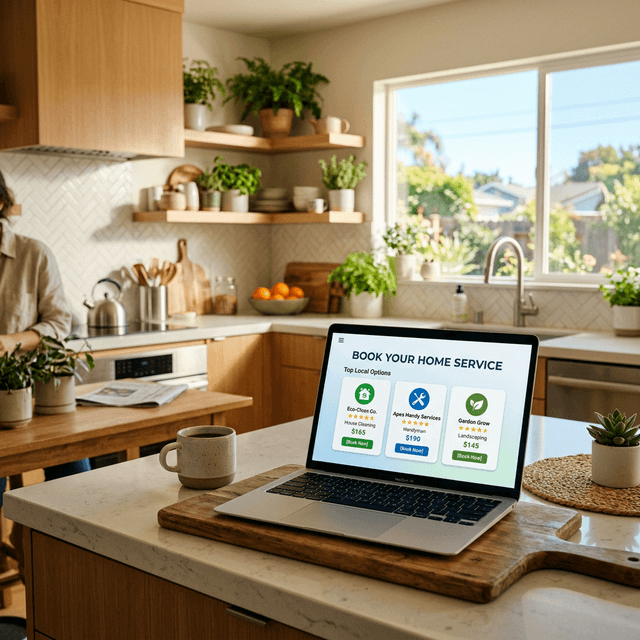
The homeowner records a guided walkthrough. The system asks the right follow-up questions, structures the scope, and returns exact or near-exact quotes.
Provider marketplace and booking layer
Service providers receive already-scoped jobs, not raw leads. Their pricing and acceptance agent checks route density, schedule availability, target margins, and job fit, then decides whether to bid or auto-accept.
AI receptionist and intake layer
Providers get a 24/7 voice, text, and web receptionist that captures demand, guides users through the quoting flow, and books jobs without human delay.
The loop gets stronger after completion. Actual labor time, crew size, change orders, refunds, margins, and reviews feed back into the model. Over time, HomeQuote AI becomes a better estimator than any individual contractor because it learns across thousands of jobs, crews, neighborhoods, and home types.
This is not just lead generation. It is the operating system for scope, quote, and dispatch.

Specific Example per ICP
Initial ideal customer profile, or ICP: owner-operated and mid-sized move-out cleaning and carpet companies in one metro area.
A renter is leaving a two-bedroom apartment with pet stains in the living room. She opens HomeQuote AI and selects move-out cleaning plus carpet treatment.
The app guides her:
- pan slowly across each room
- show the stains up close
- open the bathroom and kitchen
- confirm elevator access
- answer a few quick prompts about pets, clutter, and timing
- 2 bedrooms
- 1 bathroom
- pet stain severity moderate
- third floor with elevator
- estimated labor: 3.5 hours
- difficulty: 6/10
- Required tools: extractor and standard cleaning kit
- Quote: Exact $260.
Five local providers have pricing agents active. Four accept within seconds based on route, calendar, and target margin. The renter sees four instant-book offers ranked by value and reputation and books a slot for tomorrow morning.
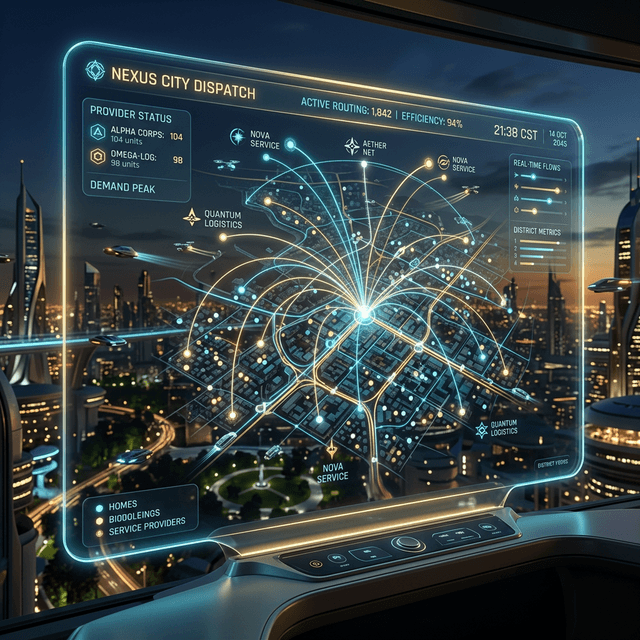
That is the wedge. Better scope quality, faster booking, fewer wasted quote visits, tighter pricing.
Market
The surface-level market is huge. The deeper market is even better.
At the top level, home services is an enormous and fragmented category. Estimates place the U.S. market at roughly $520 billion in 2023, growing toward about $1.03 trillion by 2030. Online on-demand home services are still much smaller, but they are growing faster, with multiple forecasts in the mid-teens annual growth range.
U.S. Home Services Market Projection
Baseline trajectory to 2030
That creates a misleading conclusion if you only read market reports. The opportunity is not just "another marketplace for home services."The actual opportunity is to own the estimation and routing layer across a large volume of residential work.
From First Principles:
- ✦ Home services are operationally local but structurally repetitive.
- ✦ Many categories have strong visual signal. Cleaning, painting, landscaping can be partially scoped from media.
- ✦ Providers are fragmented and under-softwared.
- ✦ Consumers increasingly expect app-speed response.
- ✦ The scarce asset is not demand. It is trusted, structured job data.
That means HomeQuote AI can start with one high-frequency, visually legible category, then expand outward by reusing the same core workflow. If HomeQuote AI becomes the default way to transform "show me the job" into "here is the price, time, and best crew," it can sit inside a meaningful slice of a trillion-dollar category.
Neglectedness
Why Now
1. Multimodal AI is usable now
Models can interpret images, speech, and text together well enough to structure messy real-world inputs into useful operational data . Five years ago this would have been a fragile demo. Now it can power a real workflow with human fallback.
2. Digitzation outpaced routing
Consumers are already comfortable finding, comparing, and booking services online. But quoting remains slow, manual, and low-trust. The booking layer evolved faster than the scoping layer.
3. Cost anxiety demands exactness
Many homeowners delay repairs because they fear surprise costs . A fast and credible quote is not just convenience. It is a psychological unlock.
Business Model
MarketplaceCoordination Infrastructure- Revenue Stream 1Marketplace Take RateCharge a take rate on completed jobs. Stronger than a classic lead fee because providers receive a scoped job and often an auto-bookable customer.
- Revenue Stream 2Software SubscriptionMonthly fees for the AI receptionist, quoting flow, calendar-aware pricing agent, and analytics.
- Revenue Stream 3API & White-labelProperty managers and insurers can pay to embed the estimation engine into their own channels.
- Revenue Stream 4Premium OptimizationDynamic pricing controls and route-density optimization for higher-tier providers.
Civilizational Impact
A lot of civilizational decay looks boring at first.
It looks like deferred maintenance. It looks like ignored leaks, mold, broken HVAC systems, dirty turnover units, cracked roofs, and unsafe living conditions that get fixed too late because the process is too uncertain, too slow, or too stressful.
HomeQuote AI points intelligence at a real bottleneck in the physical world. It helps people maintain homes earlier, with less fear and less friction. It created cleaner signals about repair demand, repair cost inflation, and where housing stock is quietly deteriorating.
“In an AGI future, one of the highest-leverage moves is turning chaotic physical work into software-defined coordination. That is exactly what this company does.”
Transferable Insight
Treat models as an API bridge for physical entropy.
True moats aren't built on making digital workflows slightly faster; they reside where fuzzy, chaotic reality collides with strict operational systems. Builders who use multimodal models to translate unstructured human sensing into deterministic, structured data objects will command the highest-friction bottlenecks in any industry.
References
MARKSPARK SOLUTIONS, U.S. Home Services Market.
View Source ↗NATIONWIDE, Home Un-Improvement.
View Source ↗GUARDIAN SERVICE, Economic Uncertainty Delaying Home Upgrades.
View Source ↗GRAND VIEW, Online On-demand Home Services 2030.
View Source ↗MARKSPARK, On Demand Home Services Market.
View Source ↗Valuation Forecast
Probability that the category leader in this space reaches at least each valuation threshold.
AI Rationale
Using computer vision to turn user-filmed walkthroughs into structured job objects and exact quotes removes the primary friction point in local home services. The AGI Futures forecaster model predicts steady adoption, mapping cleanly to a classic aggregator power-law: eventual consolidation into one or two $10B+ national leaders by 2040.
Implied Valuation Distribution (2030)
While the chart below displays cumulative probability, these boxes break down the exact probability of landing specifically within each valuation band.
Builder Proof-of-Work
Community submitted artifacts, notes, and implementations for this idea.