ProxyPilot
AI Native Proxy Voting
ProxyPilot turns proxy voting into a followable, programmable layer of shareholder power. Investors can delegate live votes to trusted operators, analysts, and public thinkers, or turn their own values into a custom voting policy that runs automatically across every company they own.
Picture the flow. A respected operator posts a brutal thread on X: vote out this board, kill this comp package, block this dilution. Shareholders do not just nod along. They click once and delegate the vote.
Then the bigger unlock appears. They can follow trusted voices where they want, write their own rules where they do not, and automate as much of the process as they choose. Proxy voting stops feeling like paperwork and starts feeling like a live interface for power.

90% duopoly. 28% retail turnout.
90% of proxy-advisory assets
ISS and Glass Lewis account for about 90% of proxy-advice assets under advice in the leading asset-based estimate, while retail investors voted only 28% of the shares they owned in 2025, the lowest level in nine years. Two firms shape a huge share of corporate governance. Most actual owners barely show up.
Problem
Today’s proxy voting industry is effectively controlled by a two-firm duopoly.
ISS and Glass Lewis create a rigid, impersonal, and often opaque decision-making layer on top of corporate governance. Shareholders are largely disconnected from the influence their votes wield. They still cannot easily translate their own values, incentives, or macro views into how their capital votes.
The result is a governance stack where trillions of dollars of influence still flow through generic templates, low participation, and inherited defaults instead of informed owner intent.
We pay obsessive attention to electoral politics, even as corporate governance quietly acts as one of civilization’s hidden steering wheels, yet a sleepy proxy stack still lets a duopoly steer it through a narrow worldview unlikely to match your own values, priorities, or vision for the future.
BottleneckTrustCoordinationRegulatory FrictionSolution Hypothesis
First, ProxyPilot gives every shareholder three ways to govern:
Follow.
Delegate a company, sector, or issue category to a trusted person or team.
Customize.
Express your own principles once, then let AI turn them into a living voting policy.
Mix.
Follow experts where they have edge, keep direct control where you care most, and automate the rest.
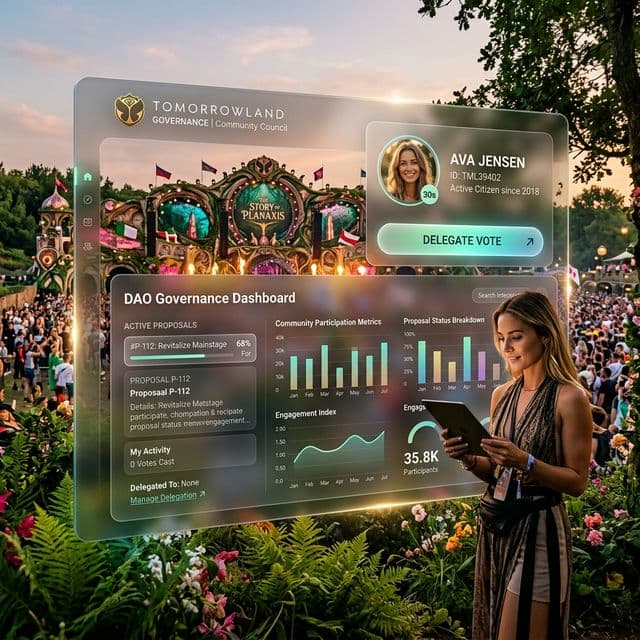
Then ProxyPilot ingests the proxy statement, company filings, prior vote history, incentive structure, capital allocation record, peer context, and public debate around the decision. It generates recommendations aligned to the shareholder’s chosen delegate or personal policy, shows the reasoning in plain English, and lets the user auto-execute, selectively approve, or override each call.
This is what leaps ahead of the status quo. The first win is one-click delegation from public content. The bigger win comes after. Users realize how easy it is to convert their values and goals into custom voting recommendations, then automate, delegate, or manually handle as much of the process as they want. Follow one expert on executive comp. Another on biotech board quality. Use your own rules on dilution and capital allocation. ProxyPilot turns governance from one-size-fits-all advice into a personalized operating system.
Then the platform expands into Mandate Studio. High-conviction shareholders and delegates can co-draft board-ready operating plans, rally support, show pledged voting power, and turn scattered frustration into credible shareholder mandates.

Ideal Customer Profile
Specific Example per ICP

A public-market thinker posts a thesis on X or Substack arguing that a company’s board destroyed value with bad capital allocation. Followers click, connect, and delegate that company’s vote in minutes.
"Follow conviction. Vote at scale."
Neglectedness
Market
This is bigger than proxy advice. It is the control layer for shareholder intent.
There are three obvious markets. First, the consumer and creator market, where influential voices turn governance commentary into followable delegated power. Second, the embedded platform market, where brokerages, wealth platforms, and asset managers need better voting choice UX as pass-through voting scales. Third, the activism and issuer-engagement market, where shareholders need a faster path from thesis to coordinated mandate.
The infrastructure shift is already underway. Broadridge said in March 2026 that its pass-through voting solution was available across 600+ funds with more than $8 trillion in assets, up from 100 funds two years earlier. BlackRock says 650+ global funds are eligible for Voting Choice, with about $885 billion of eligible assets already committed as of December 31, 2025. The plumbing is getting built. The product layer is still wide open.
First-principles view: whoever owns the best interface for translating shareholder intent into action gets leverage over an enormous stream of capital allocation decisions. In an AGI world, reading documents gets cheap. Trust, preference formation, coordination, and execution become the scarce assets.

The infrastructure shift from theoretical models to reality.

Why now
The old proxy-advisor era is cracking, but the replacement is still weak.
Pass-through and voting-choice infrastructure are now real, not theoretical. That means there is finally something to plug into. At the same time, retail participation is still terrible, which means the user problem is still unsolved. And politically, the concentration issue is no longer invisible. In 2025, hearing testimony framed ISS and Glass Lewis as dominating over 90% of the proxy-advisory market and materially shaping governance outcomes.
The timing on AI also matters. The product is finally possible because AI can compress dense document review, compare company context at scale, and turn vague preferences into structured policy logic. That does not mean fully autonomous governance is ready. It remains an interface between human values and corporate voting that can finally become dramatically better.
Unique Go To Market
This is the fun part. It is also the wedge.
A respected investor, operator, or sector expert posts about an upcoming vote on X, LinkedIn, newsletters, YouTube, podcasts, or Substack. Their post is not just commentary. It contains a direct action:
"Delegate this vote to me."
A shareholder who agrees clicks once, connects their account, and delegates that company’s vote, or only that issue category, in minutes. The creator converts audience into real influence. The shareholder converts agreement into action. And once inside the platform, the user sees the bigger unlock: they can follow multiple delegates, create a personal policy, automate recurring decisions, and fine-tune as much of the process as they want.
This is a much more native growth loop than trying to convince random people to care about proxy season in the abstract. It piggybacks on where financial opinion already spreads and gives that content a missing primitive: direct governance action. Retail participation is still just 28% of shares owned, which means there is a huge reservoir of dormant shareholder power waiting for a much better interface.
Who buys first and why they cannot wait
The first users are influential public-market voices and their audiences. The first enterprise buyers are the platforms that realize voting choice is turning into a feature war. Once one consumer brokerage makes proxy voting social, personalized, and automated, the others will not want to look asleep.
Business Model
Own the consumer surface first. Sell the rails second.
ProxyPilot’s own platform
Launch the standalone consumer and creator platform first. That is where the viral loop lives. Influential operators, analysts, newsletter writers, and public thinkers publish live voting calls. Shareholders click, connect, and delegate. Premium delegates can sell paid channels, deeper governance research, or members-only voting communities. ProxyPilot takes a platform fee.
Revenue Engine
- Marketplace take rate on paid delegate channels
- Governance communities monetization
The Synthesis
This is simpler and more compelling because each side reinforces the other. The consumer app proves demand and builds the network. The enterprise layer scales distribution and embeds the product where the votes already live.
Moat potential: 81/100
Data advantage or switching cost in an AGI world
Moat potential: 81/100
Data advantage or switching cost in an AGI world
The moat is not a model. The moat is the graph.
ProxyPilot compounds a unique dataset of:
- who delegates to whom
- which public arguments convert into real voting action
- how policy preferences cluster by investor type
- where users override automation
- which delegates build durable trust
- how governance campaigns turn into mandates
In an AGI world, analysis gets cheaper. Reputation, trust, distribution, and execution history get more valuable. ProxyPilot sits exactly at that layer.
Difficulty to Get to Market: 69/100
Buildable now, but trust/compliance matter more than tech.
Difficulty to Get to Market: 69/100
Buildable now, but trust/compliance matter more than tech.
Tech
MEDIUMThe challenge is not whether AI can summarize a proxy. It is whether it can do it reliably, transparently, and in a way users will trust.
Mitigation: start with narrow vote categories, ground every recommendation in cited source text, and keep human override obvious.
Market
MEDIUMMost shareholders do not want homework. They want leverage.
Mitigation: lead with creator-driven one-click delegation, then reveal deeper customization only after users are in the product.
Regulatory
HIGHProxy solicitation, delegation, disclosure, and beneficial ownership rules matter.
Mitigation: build with securities counsel from day one, keep clear compliance rails, separate governance recommendations from individualized trading advice, and make disclosure flows native instead of bolted on.
Capital
MEDIUMThis is not frontier-lab expensive, but integrations, compliance, and trust-building are real work.
Mitigation: start with one creator cohort and one design-partner platform instead of trying to boil the ocean.
Execution
HIGHThis requires strong product instincts across fintech, governance, audience mechanics, and incentives.
Mitigation: narrow version one to one killer loop: public thesis to delegated live vote in under three minutes.
AGI Future Edge
As intelligence becomes abundant, the scarce thing is no longer analysis. It is trusted choice.
"Skin-in-the-game influence, coordinated."
ProxyPilot gets stronger in that world. AI handles the reading, matching, summarizing, comparison, and simulation. Humans still decide whose judgment they trust, which values matter, and which tradeoffs they accept. That makes ProxyPilot a human-choice layer on top of machine intelligence, not a surrender of governance to machines.
There is also a bigger implication. ProxyPilot can function as an early real-world testbed for AI-native Delegated Direct Democracy, starting inside corporate governance where delegation, accountability, and bounded issue sets are already legible. If people can successfully mix direct voting, trusted delegates, personal value profiles, and AI-assisted recommendation layers in board elections and shareholder proposals, that becomes useful evidence for how similar systems could eventually work in municipal, state, and national governance. Corporate proxy voting is not the final destination. It is a tractable proving ground.
Longer term, the platform can move from recommendations to simulations. What happens to capital allocation if this board slate wins. What happens to dilution risk if this compensation package passes. What happens to long-term value creation if a proposed activist plan is adopted. That is when proxy voting stops being reactive and becomes strategic.
First experiment
First experiment
Quick falsifiable hypothesis
If 15 influential public-market voices each get a live ProxyPilot delegate page for one real company vote, at least 8% of shareholders who click through from their content will connect an account and delegate a live vote during that proxy cycle.
The smallest valid test is one company, one vote, one creator cohort, one delegation flow, one compliance wrapper.
Transferable Insight
Valuation Forecast
Probability that the category leader in this space reaches at least each valuation threshold.
AI Rationale
ProxyPilot operates as a human-choice orchestration layer on top of massive capital allocation streams. The AGI Futures forecaster model projects a solid mid-tier outcome based on shifting existing proxy-advice assets, with a significant probability of unlocking a multi-billion dollar platform if creator-led delegation and personalized policy routing become the default behavior across major retail and embedded brokerages.
Implied Valuation Distribution (2030)
While the chart below displays cumulative probability, these boxes break down the exact probability of landing specifically within each valuation band.
Civilizational Impact
Realigning capital allocation with human values.
Public companies allocate absurd amounts of capital, talent, research, and infrastructure. A hidden duopoly shaping that layer is not a small inefficiency. It is a civilizational bottleneck.
ProxyPilot pushes in the opposite direction. It makes corporate governance more legible, more pluralistic, and more responsive to actual owner intent. It creates a market for governance judgment instead of forcing everyone through a tiny set of defaults. It gives high-signal operators a path to influence without needing to become giant institutions first. And if the open standards layer is done right, it makes the next generation of shareholder infrastructure harder to capture.
It also matters beyond corporate governance itself. ProxyPilot could become one of the earliest serious demonstrations that AI-assisted delegated decision systems can work in the real world without collapsing into chaos. That makes this more than a governance startup. It is also a bridge technology for more AI-native civic coordination.
This is one of those ideas that looks niche until you realize it sits directly on top of how trillions of dollars get steered.
72Impact Score
Better Governance
Decentralizes board oversight and prevents institutional capture by massive asset managers.
Pluralism & Choice
Lets individuals and smaller funds project their specific values without forced bundling.
Decentralization
Creates a market for governance judgment instead of forcing everyone through a tiny set of defaults.
Accountability
Produces real-time feedback loops between shareholders and executives based on transparent policies.
Open Source Priority
KPIs
- Delegated voting power attached to live proposals
- Conversion rate from creator content to connected voting account
- Percentage of users who complete at least one real delegation
- Percentage of active users with a custom voting policy
- Override rate by issue type
- Enterprise platform retention and expansion after integration
Acronyms & References
Glossary
- AGI Artificial general intelligence
- AI Artificial intelligence
- API Application programming interface
- AUM Assets under management
- DDD Delegated Direct Democracy, a governance model where people can vote directly on issues or delegate decision power issue-by-issue to trusted representatives, with the ability to revoke and reassign that delegation dynamically
- ETF Exchange-traded fund
- ICP Ideal customer profile
- SaaS Software as a service
Sources
Builder Proof-of-Work
Community submitted artifacts, notes, and implementations for this idea.