Skyhold
A thesis-driven real estate company that acquires beautiful, access-constrained land near major metros before AVs and eVTOL aircraft reprice it, then compounds the upside with resilience, shared luxury infrastructure, and a stronger community layer than normal development.
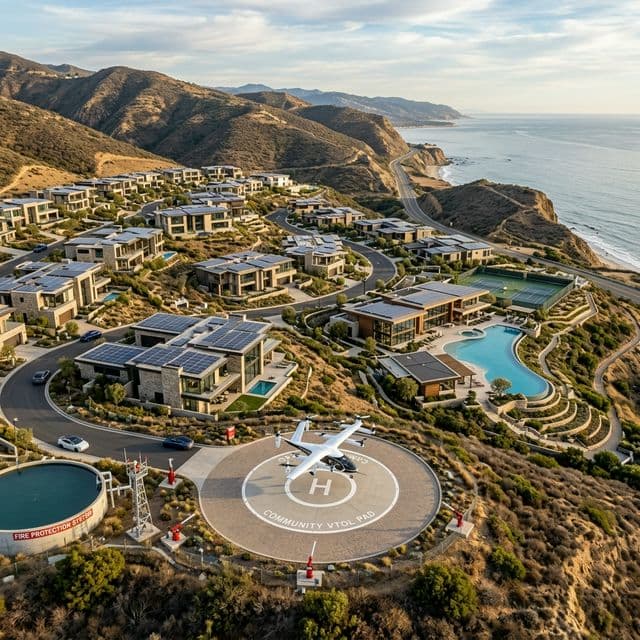
A founder family lives in the foothills—beautiful, but previously too far. Now, AVs turn the commute into focus time, and a shared eVTOL node makes city hops trivial. They return not to an isolated house, but to a fire-hardened, premium physical network: a massive solarium, thermal circuits, coworking, and aligned neighbors. It's not a commune format. It's for those who know distance will matter less, and place will matter more.
of U.S. business investment growth driven by AI in 2025.
Wall Street's consensus for 2026 AI hyperscaler capex.
Capital is already chasing the near-term AGI thesis through chips, data centers, and power. This idea expresses the same worldview through land.
The infrastructure of intelligence is crowded.
Physical proximity is not.
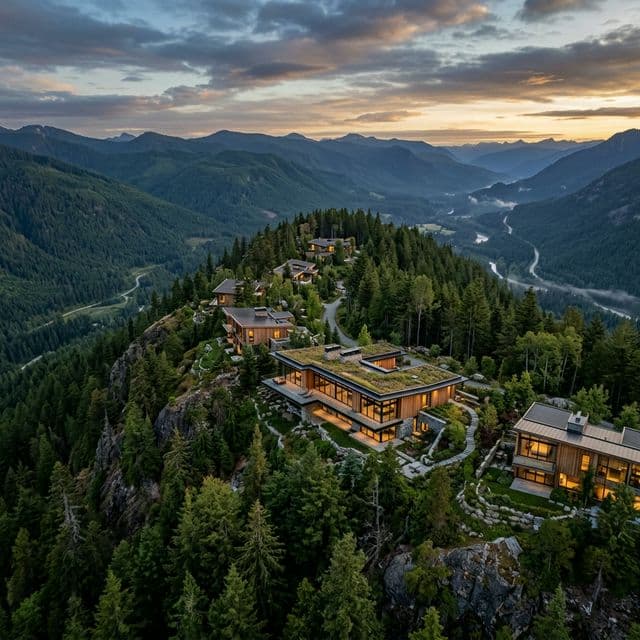
Beautiful land behaves differently from software and intelligence. Scarce access to beauty does not scale.
Most investors who buy the near-term AGI thesis are piling into the obvious bottlenecks: semiconductors, power, networking, cloud, robotics, and frontier model companies. That is rational. It is also crowded. The market is moving fast to price the infrastructure of intelligence. It is much slower to price what abundant intelligence and autonomous mobility do to where people want to live.
Beautiful land behaves differently from software, intelligence, and many manufactured goods. If abundant intelligence drives the marginal cost of many services lower, and automation keeps reducing the labor share of building and operating the world, many categories get cheaper. A ridgeline with views, privacy, defensibility, and proximity to a major city does not. Coastline does not scale. Foothill parcels do not scale. Scarce access to beauty does not scale.
That creates a tension. We are moving toward a world where intelligence, design, logistics, and even parts of construction get cheaper. At the same time, the highest-quality land near major economic nodes may get more valuable, especially if autonomous vehicles compress commute pain and eVTOL networks compress selected premium corridors. Existing real estate markets still price most land as if current access friction is permanent.
Civilizationally, this matters too. If the AGI future concentrates talent into a few brittle metros while the most beautiful nearby land remains underdesigned, fire-vulnerable, socially thin, and inaccessible, we miss a chance to build more resilient, higher-trust, more life-giving ways of living near the frontier.
Buy the land before distance collapses.
Mechanism first:
buy scenic land whose current pricing still reflects old mobility constraints, old infrastructure assumptions, and weak community design. Then improve three layers at once:
1. Access layer
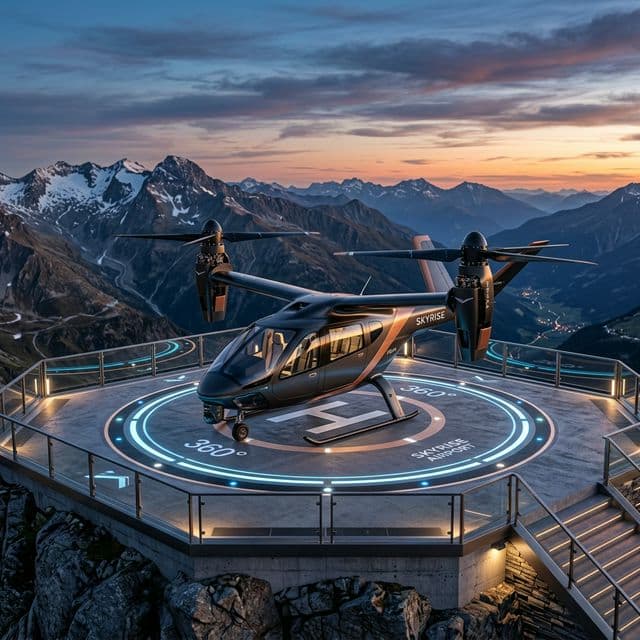
Target locations that become materially better if autonomous vehicles make long trips productive and if eVTOL networks eventually shorten selected city and airport corridors.
2. Resilience layer
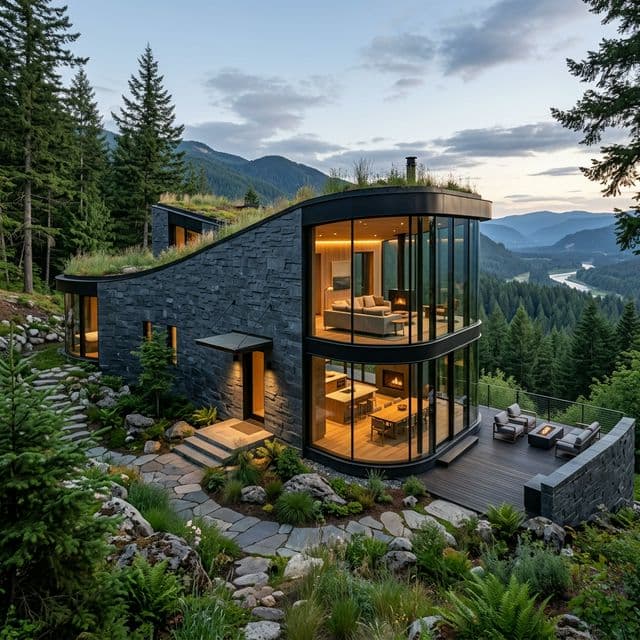
Build fire mitigation, water systems, Microgrids, defensible space, emergency readiness, and insurance-aware site design into the core plan.

3. Community layer
Create private homes around an extraordinary communal core that is irrational for a single household to build alone.
Product form:
a developer-operator for the autonomy age. Acquire beautiful, supply-constrained land near major metros. Build premium resilience-first communities with a shared luxury core, future-ready mobility access, and a carefully designed social contract.
Who moves to the edge?
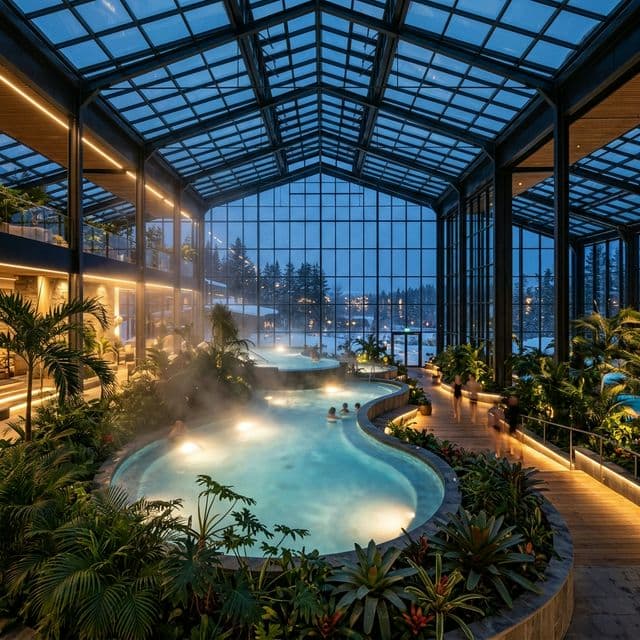
The shared community core is the second product: irrational to build alone, transformative when shared.
Founder family near Boulder
They want mountain-adjacent beauty, stronger community, and faster airport access, but do not want fully remote mountain friction. Skyhold gives them a private home plus a shared solarium, thermal wellness circuit, coworking, and a resilient site plan. Today, it already beats an isolated custom home. Over time, autonomous vehicle access and a shared premium air corridor make it even better.
AI executive outside Los Angeles
She wants Malibu-hills-level beauty without daily surface-transport pain. Skyhold gives her a home in a fire-hardened community with better shared services, a stronger logistics layer, and eventual access to premium short-hop air mobility instead of betting on a single isolated estate.
Second-home buyer converting to primary residence
He starts as a seasonal owner. The community’s shared amenities, guest infrastructure, and lower-friction access turn it into a realistic primary home. The project captures value from that migration path instead of just selling a view lot.
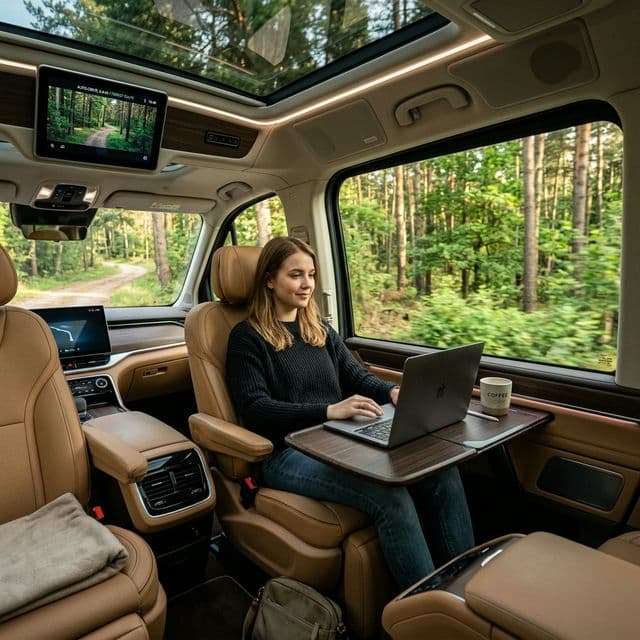
Turn the commute distance into compounding focus bandwidth.
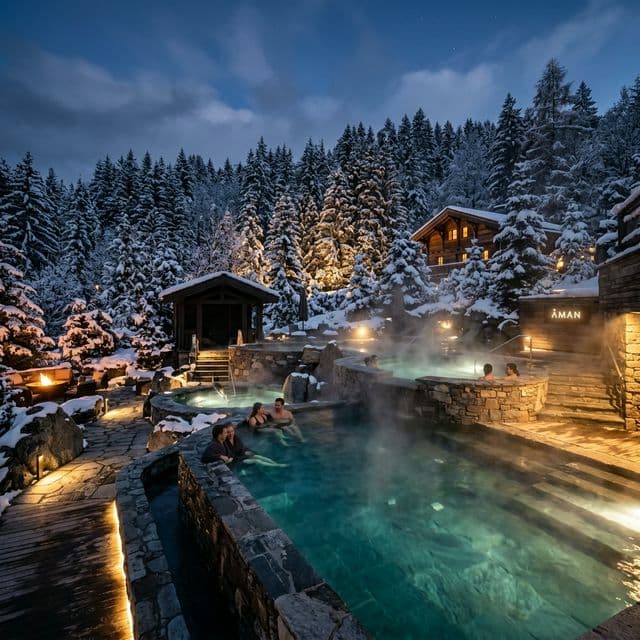
An extraordinary communal core, irrational to build alone.
A hard-asset expression of
the near-term AGI thesis.
Neglectedness
Market
The obvious AGI trades are becoming more expensive and more consensus. Goldman Sachs Research says consensus 2026 capital spending by AI hyperscalers has risen to $527 billion, and TD Economics says AI drove nearly three-quarters of 2025 U.S. business investment growth.
Skyhold is one of the lowest-risk ways to be right. If AVs/eVTOLs arrive slower, you still own scarce, beautiful land. If construction gets cheaper from AGI, development costs improve. The market is not "all housing." It is the subset of scenic edge land penalized by access friction today.
Why Now
Autonomous driving has crossed from demo to service. Waymo reports over 250,000 paid trips per week across major cities.
Advanced air mobility is no longer science fiction. The FAA finalized powered-lift operating rules in Oct 2024. Archer’s Los Angeles network targets 2026 operations.
At the same time, land scarcity remains a hard constraint in inelastic housing markets.
Thesis-driven real estate.
Core Value Flow
- • Acquire land before access repricing
- • Entitle and develop better than incumbents
- • Build premium resilience and community
- • Hold or sell across multiple layers
Revenue Layers
- • Land appreciation from access arbitrage
- • Development spread on homes/lots
- • Recurring community/wellness revenue
- • Premium mobility concierge services
- • Asset management & development fees
Capital Structure
- • Parent Co: owns brand, design, operations
- • Project SPVs: holds each individual site
- • Seeded by founders and aligned backers
- • Proves demand before retail access
Market Strategy & Edge.
Unique Go To Market
CustomerFoundersFamiliesUser wedge: people already buying the near-term AGI thesis, who want a lower-volatility expression than frontier labs. Includes founders, priced-out families, and family offices.
Viral growth loop: Publish the Access Repricing Index. Rank the top 100 beautiful edge locations by beauty, access friction today, AV/eVTOL upside, fire resilience, and development friendliness. Turns Skyhold into a media object first.
AGI Future Edge
As intelligence gets cheaper, Skyhold's value compounds:
- AI-native site selection improves
- Generative design improves land planning
- Simulations improve wildfire & insurance planning
- Robotics lower development costs
- AVs make edge living easier immediately
- eVTOLs make nodes dramatically more accessible
Execution Metrics.
Moat Potential
Difficulty to Bring to Market
Civilizational Impact.
This idea helps steer the AGI future toward resilience, human flourishing, and community renewal.
- Creates a lower-brittleness alternative to hyperconcentrated urban life.
- Funds wildfire mitigation in vulnerable landscapes.
- Makes beautiful environments usable without total sprawl.
- Treats community design as a serious product.
- Provides believers in the AGI future a less zero-sum hard-asset pathway.
57Impact Score
KPIs
- Land basis versus local premium comps at acquisition
- Months from acquisition to first validated buyer deposits
- Gross margin on first flagship project
- Amenity usage and community retention rate
- Insurance cost and wildfire-resilience performance vs nearby comps
Open Source Priority
View First Experiment
Quick falsifiable hypothesis: affluent buyers who already believe in AV and eVTOL adoption will pay a meaningful premium for a future-ready edge community concept if the base product is already compelling without aircraft.
Minimal test: Secure control over one target parcel through an option. Produce a sharp concept package with site plan, amenity core, resilience plan, and access thesis. Run a structured demand test with 50 to 100 qualified prospects in one metro. Success threshold: 10 serious buyers, 3 soft reservation commitments, and at least one capital partner interested in site-level underwriting.
Transferable Insight
"When a transformative technology thesis gets crowded in the obvious bottlenecks, some of the best risk-adjusted opportunities sit one layer downstream in physical assets the market still prices as if the old world will persist."
Acronyms & References
Definitions
- AV: autonomous vehicle
- eVTOL: electric vertical takeoff and landing aircraft
- SPV: special purpose vehicle, a separate legal entity for one project or asset
- Microgrid: a local energy system that can operate independently from the wider grid
- Entitlement: the land-use and permitting process required before development can proceed
Valuation Forecast
Probability that the category leader in this space reaches at least each valuation threshold.
AI Rationale
By targeting real estate before autonomous vehicles and eVTOL aircraft completely reprice edge locations, Skyhold executes a capital-intensive physical arbitrage play. While near-term operations involve traditional development friction and significant physical infrastructure costs, the AGI Futures Valuation Forecasting Model predicts outsized exponential scaling potential by 2040, as autonomous networks dissolve legacy commuting distances and redefine what constitutes prime real estate.
Implied Valuation Distribution (2030)
While the chart below displays cumulative probability, these boxes break down the exact probability of landing specifically within each valuation band.
Builder Proof-of-Work
Community submitted artifacts, notes, and implementations for this idea.