Wild Return
Nature-grounded end-of-life sanctuary
A nature-grounded end-of-life sanctuary that combines natural burial, palliative care partnerships, death doulas, psychologists, ritual design, and optional licensed psychedelic facilitation to make dying more peaceful and life more meaningful.
Demand vs. Infrastructure
61.4%
Americans interested in
green funeral options
< 1%
Infrastructure supply
built for this demand
61.4% of Americans say they are interested in green funeral options, yet the latest public GBC category breakdown still listed only 179 certified funeral homes and 9 certified conservation cemeteries, while NFDA says the U.S. has more than 15,401 funeral homes overall. Demand is mainstream. Integrated, high-trust supply is still tiny.
The Problem
Modern deathcare is optimized for containment, throughput, and liability. It is not optimized for truth.
The dominant menu is industrial burial on one side and cremation on the other. Conventional burial still typically means embalming, resource-intensive caskets, and vault-based cemetery infrastructure. Green burial standards were created in direct opposition to that model, emphasizing unembalmed remains, biodegradable materials, and land practices that reduce environmental harm and can support habitat protection.
Cremation solves some of the machinery problem, but it often dissolves place, continuity, and ecology at the exact moment families most need them. Meanwhile, the broader medical system still tends to push death out of communal life and into institutional pipelines. The 2022 Lancet Commission on the Value of Death argued that modern societies have over-medicalized death and neglected its social and relational dimensions.
Solution Hypothesis
Knowledge GraphsLarge Language ModelsTagline
Build the place people wish existed when cure is no longer the point.
The mechanism is straightforward. When death is made less industrial, more local, and more embodied, families get more agency, more coherence, and a better container for grief. When burial is tied to protected land and ecological stewardship, the disposition itself becomes restorative rather than extractive.
The Five Layers
Protected Land
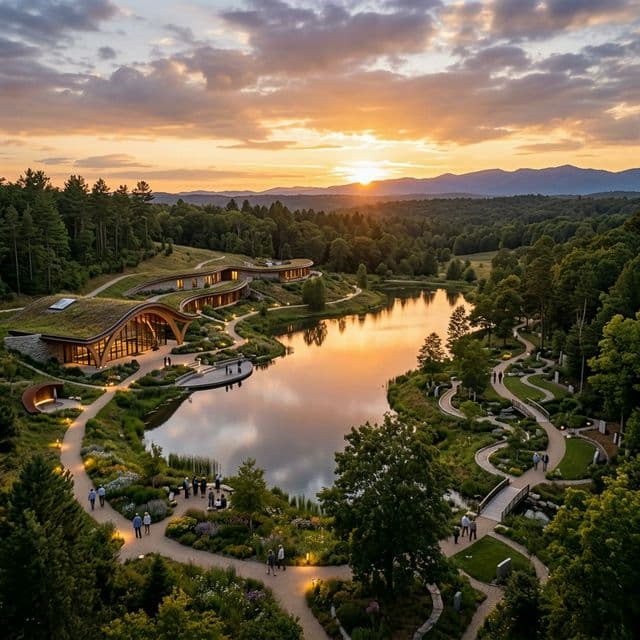
For natural burial, memorial groves, walking paths, native ecology, and simple markers mapping systems aligned with conservation principles.
In-Person Support
Integrated palliative care to improve quality of life, alongside end-of-life doulas as a nonmedical layer of practical, emotional, and existential support.
Ritual Design
Structured meaning-making inspired by meaning-centered psychotherapy, offering profound spiritual well-being near the end of life.
Quiet Architecture
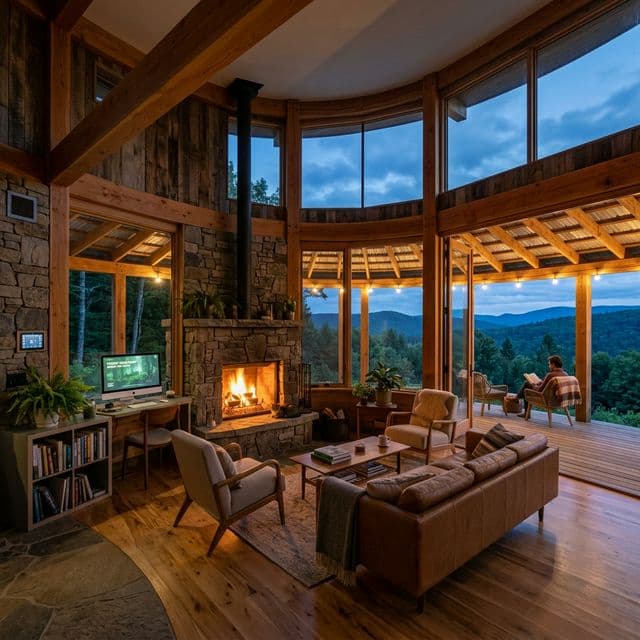
A common house. Quiet rooms. Covered porches. Firelight. Natural materials that feel like they belong to mortality and memory, not a transactions team.
Licensed Facilitation
Optional licensed psychedelic facilitation where legal and clinically appropriate, to sustain reductions in anxiety and depression.
Specific Example per ICP
FamiliesCaregivers
Facing terminal illness
Do not want the last chapter to feel like a procedural handoff between fluorescent rooms and generic vendors. They want trees, family, air, ritual, and a body returning to the earth in a way that preserves living land over polished boxes underground.
Neglectedness
The Market & Why Now
Build Now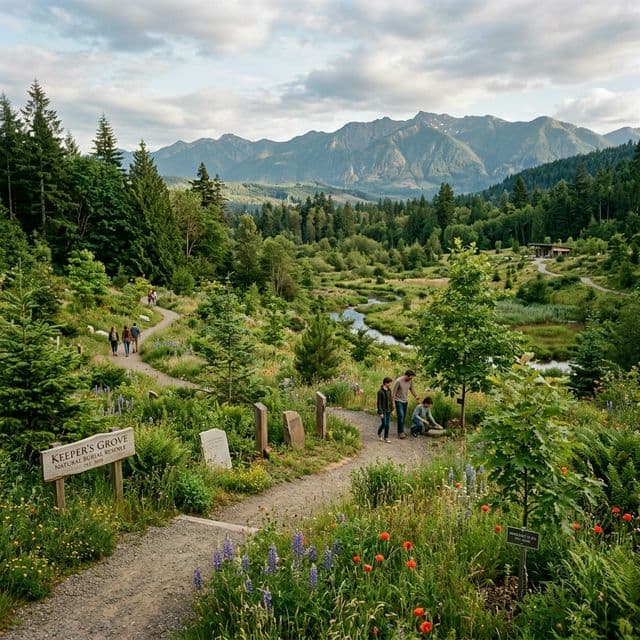
NFDA says funeral homes generate $16.3 billion in U.S. revenue, while crematories and cemeteries generate another $4.274 billion. The national cremation rate is projected at 63.4% in 2025, reaching 82.3% by 2045. The obvious read is that burial is dying. The better read is that people are abandoning old burial forms faster than better replacements are being built.
Wild Return does not need to win mass commodity burial volume. It can build a premium, trust-heavy category around burial rights, family support, and land stewardship.
Business Model
InstitutionCommunityWild Return should be structured as a place-first institution with aligned service revenue, not as a funeral home with prettier copy. The core revenue streams are burial plot sales, pre-need planning, family coordination, memorial packages, and stewardship contributions.
Land & Cemetery Entity
Controls protected land, perpetual care, conservation obligations, and burial operations.
Operating Entity
Handles rituals, planning, grief support coordination, hospitality, and annual remembrance programming.
Optional Licensed Affiliate
Provides psychedelic facilitation under state laws (e.g. Colorado) where applicable and structurally distinct.
Moat Potential
Built on place, trust, permissions, and memory.
Difficulty to Bring to Market
Demand is massive, but executing land-intensive, highly-regulated real infrastructure is extremely difficult.
First Experiment
In one target geography, test if families and partners will place refundable deposits before the sanctuary exists.
Civilizational Impact
A society that turns death into sterile logistics eventually hollows out life too. Wild Return pushes in the opposite direction. It makes mortality more visible, care more communal, burial more ecologically coherent, and grief less outsourced.
AGI Future Edge
Most founders assume every winning institution becomes more digital. Some become more human. As synthetic media proliferates and cognition gets cheaper, scarce physical goods—trust, place, witness, ritual—rise in value. Software should support the sanctuary, not replace it.
Open Source Priority
Transferable Insight
When a category is emotionally central and institutionally broken, the opportunity is rarely a better transaction. It is a better ritual container.
The best companies in those categories do not just provide a service. They redesign the emotional architecture around the moment.