Signal House
Curated Focus Rooms
An immersive deep work network where people work and study in beautifully curated virtual rooms, build habitual flow-state spaces, and find aligned collaborators without breaking focus.
The Cost of Context Switching
Attention on a single screen fell from 150 seconds in 2004 to 47 seconds by 2020.
Global Attention Degradation
The Problem
Modern work and study happen inside software built to fragment attention. Notifications, feeds, tab switching, and ambient internet pull make it harder to enter deep focus and easier to stay shallow. When people switch tasks before mentally closing the previous one, performance on the next task suffers because some attention remains stuck on unfinished work.
The market has validated fragments of the problem, not the full stack. Ambient tools give you vibe. Virtual coworking gives you accountability. Spatial products give you presence. LifeAt shows strong demand for immersive workspaces , Focusmate shows demand for virtual body doubling , and Gather shows demand for persistent online spaces . What is still missing is the product that fuses immersive environment, protected focus, room identity, and high-signal social sorting into one network built equally for work and study.
Civilizationally, this matters because more value is being created by self-directed knowledge work. The International Labour Organization argues that AGI and large language models are more likely to transform day-to-day knowledge-work tasks than simply eliminate knowledge workers . That raises the value of every protected hour and every high-signal collaborator relationship formed around real work or study.
Solution Hypothesis
The mechanism is constrained social presence inside AI-curated environments.
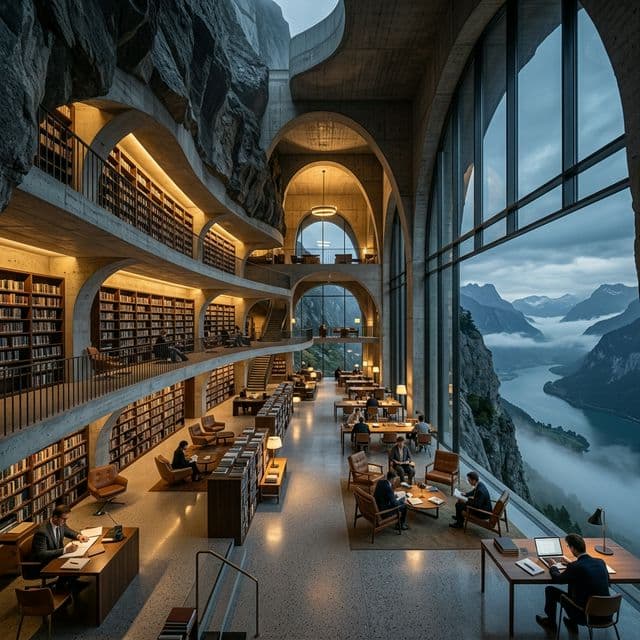
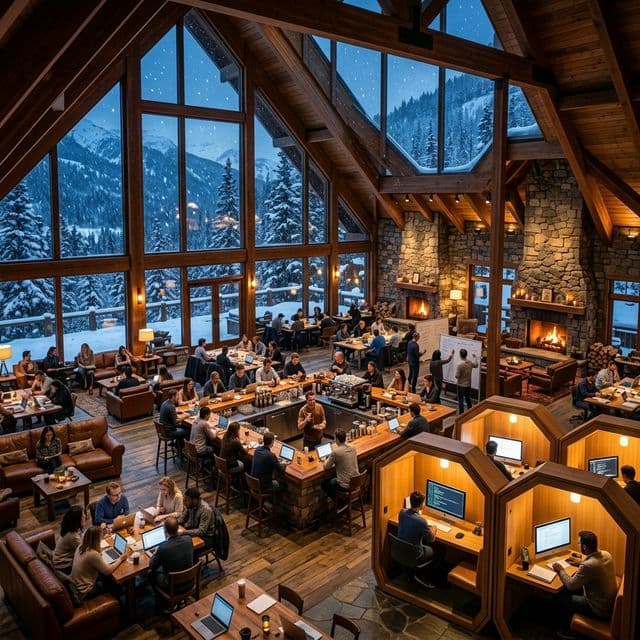
Signal House gives people rooms that feel alive enough to support momentum and selective connection, but structured enough to protect concentration. AI makes those rooms fully curatable. A storm-lit observatory for physics PhDs. A rain-soaked penthouse for founders. A Tomorrowland-style salon for ambitious builders. The room is not decoration. It is behavior design. Ambient sound research suggests moderate noise improves creative-task performance , and social facilitation research suggests the presence of others shapes performance .
Deep Focus Mode
You are present but unavailable. People can see you are there. They cannot interrupt you. You get the emotional benefit of shared presence without paying the cognitive tax of unwanted interaction.
Social Mode
You become discoverable. Show what you are working on, see what others are doing, and connect. That lets the room serve both solitude and serendipity without forcing either one at the wrong moment.
There are two products here, not one.
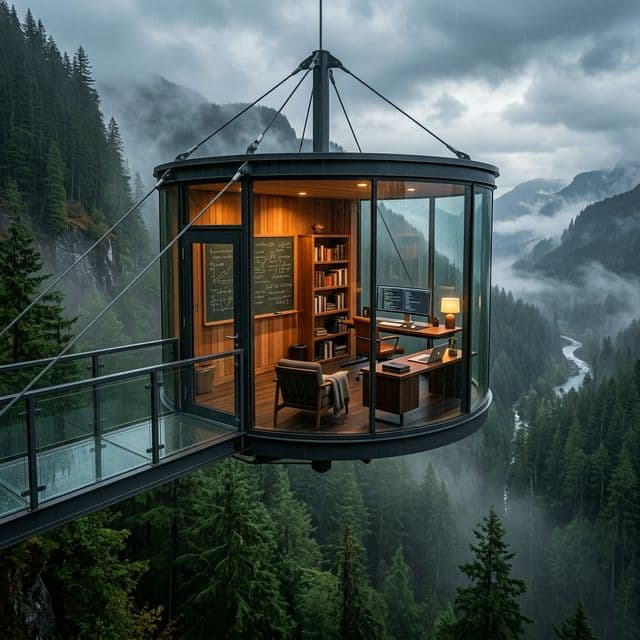
1. The Personal Flow-State Room
A user builds a space tuned to their rhythms. Same environment. Same sound. Habit research suggests stable contextual cues increase automaticity and help habit repetition . They are not just aesthetic. They are conditioned triggers for getting into motion faster.
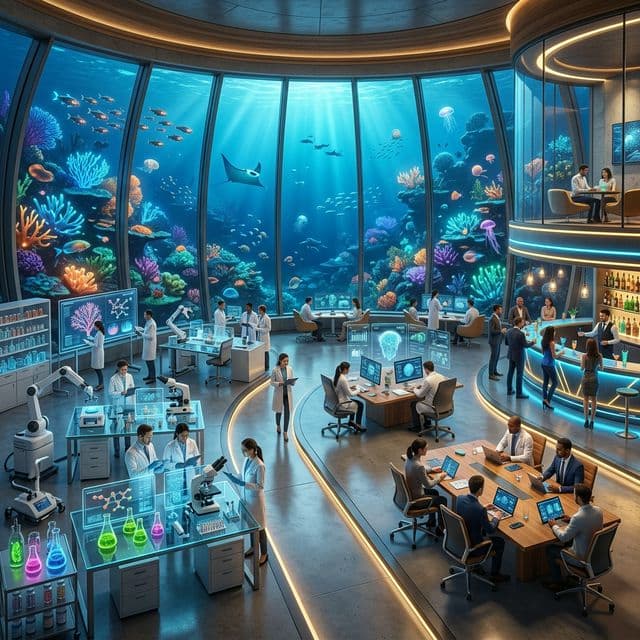
2. The Canonical Room for a Niche
A host creates the place where a tribe shows up to work, hang out, recruit, and collaborate. In an AI future, the scarce layer shifts toward curation, trust, norms, and being known as the person or group that convenes the highest-signal version of a niche.
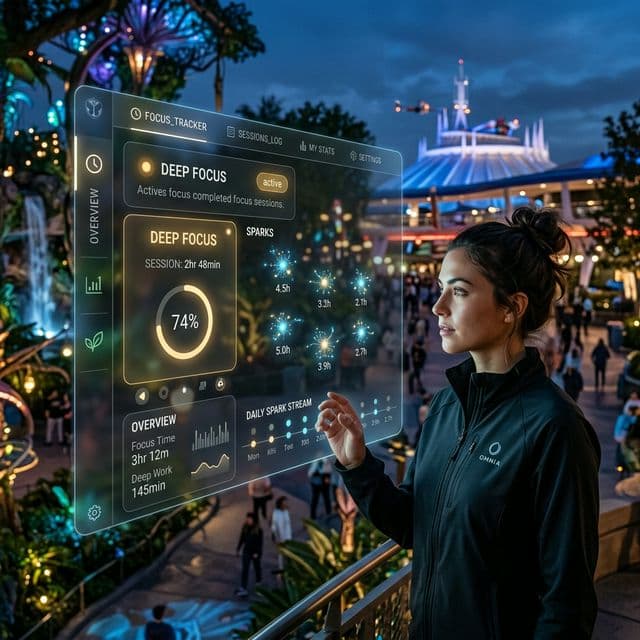
The progression loop: Focus sessions create Sparks. Sparks make the room evolve. More objects. Better aesthetics. The room becomes visible proof of disciplined work and study.
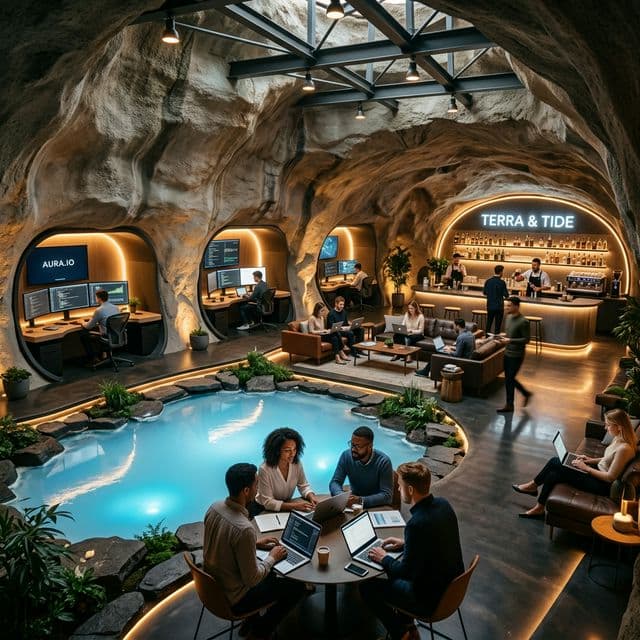
Specific Example per ICP
Founders
A founder joins the canonical room for AI-native builders before a launch sprint. The environment is sharp, high-status, and clearly built for execution. During Deep Focus mode, the room feels like a silent cluster of serious operators shipping in parallel. After the sprint, the founder switches to Social mode, surfaces “raising pre-seed for AI workflow infra” or “looking for growth engineer,” and instantly sees the handful of people in the room who are worth meeting. The value is not just better focus. It is a better collision surface for ambitious people.
Students
A physics student enters a storm-lit observatory room built for technical study. During Deep Focus mode, the room becomes a protected academic commons. The student gets the emotional lift of not being alone without the chaos of a group chat or noisy study Discord. After the session, Social mode reveals other people grinding through similar material, preparing for the same exam, or applying to the same labs. The room becomes both a focus environment and a talent filter.
Writers and researchers
A writer opens the same customized room every morning on the left side of an ultrawide monitor. Same weather. Same lighting. Same chair placement. Same sound layer. Same rule set. Over time, entering that room stops feeling like a choice and starts feeling like the start button for long-form thought. After a 90 minute block, the writer switches into Social mode and surfaces the topic to invite the right kind of conversation without disrupting the work itself. The room becomes a behavioral ritual, not just a backdrop.
Hosts and niche community leaders
A host builds the default room for a niche, not just another chat server. Maybe it is the best online room for crypto day traders. Maybe it is where physics PhDs gather for deep reading. The host who builds the canonical room gets status, distribution, recruiting leverage, and a much stronger community product than a forum, meetup page, or Discord server.
Neglectedness
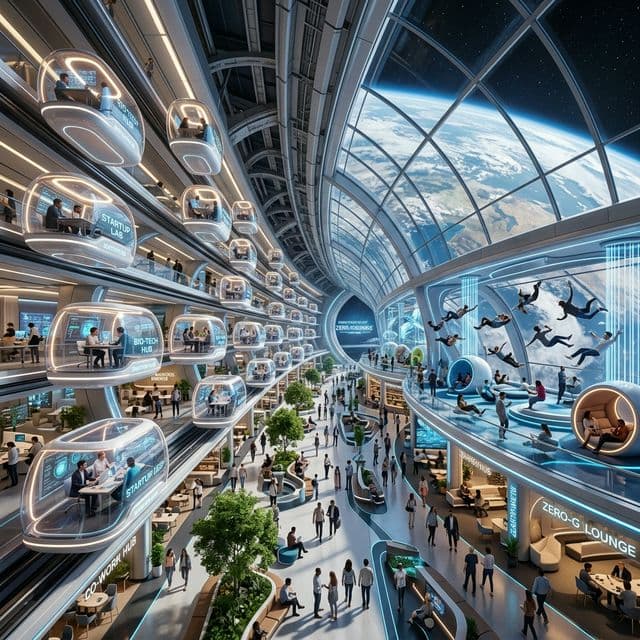
Market & Why Now
The first market is not "everyone who wants to be more productive." It is people who already feel the pain sharply and seek substitutes:
- - founders and remote knowledge workers
- - students doing serious academic work
- - writers and researchers
- - creator-led communities
Why now: The internet got world-class at hijacking attention before anyone built the native infrastructure to protect it. Now focused hours are becoming more leveraged, not less. Millions already use virtual coworking. More work happens inside self-directed digital contexts. And LLMs increase the output of each serious user.
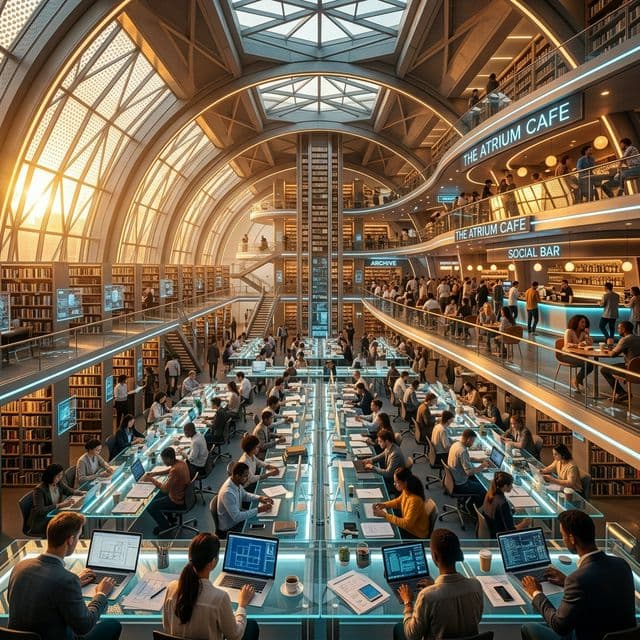
Business Model
Free / Premium
- ✦ Join any open room & earn Sparks
- ✦ Upgrade rooms over time through real work
- ✦ Premium: Distraction-blocking cross-device software
- ✦ Premium: High-end customization
Host Economics
- ✦ Pay for visitor filters based on credentials
- ✦ Premium room controls and moderation
- ✦ Higher-trust gating for curated communities
- ✦ Tools for building the canonical niche room
First Experiment
Launch one browser-based flagship room for founders and students.
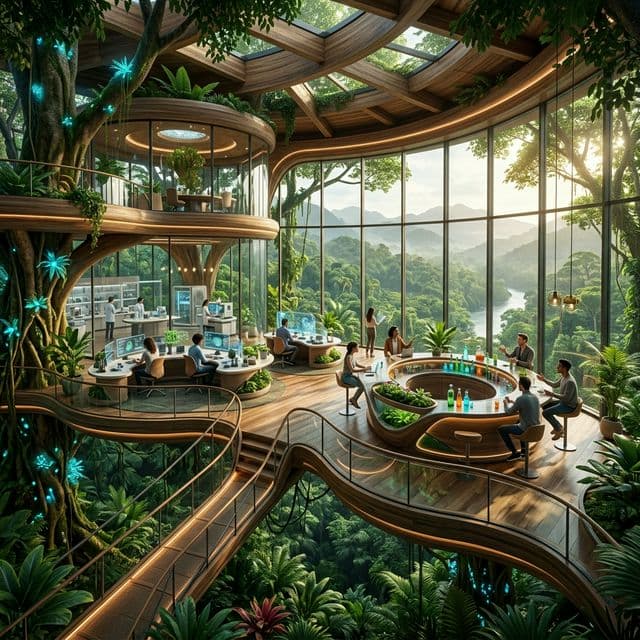
Civilizational Impact
Most software monetizes distraction. This monetizes restored agency.
If more founders, students, researchers, writers, and builders can protect attention and find aligned collaborators faster, more useful work gets finished. If more niche communities can gather inside high-signal spaces built for doing rather than scrolling, the internet gets slightly less performative and slightly more generative.
Transferable Insight
"The next great internet products will not maximize time spent. They will maximize progress per unit of attention, and the best of them will turn curation into status."